
Table of ContentsRalph Waldo Trine
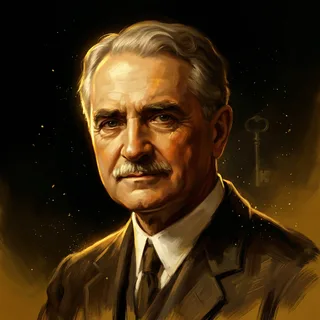
Ralph Waldo Trine
Last updated: September 4, 2026
The man who made New Thought a mass movement by packaging transcendental philosophy into practical psychology.
Lived
1866 – 1958
Nationality
American
Tradition
New Thought
Known For
In Tune with the Infinite (1897)
Tone
Light-Leaning2 / 6
Thought-as-force, oneness with God. Positive with philosophical weight.
Why Trine Matters
Ralph Waldo Trine transformed esoteric metaphysics into accessible self-help, creating the template for modern inspirational literature. His In Tune with the Infinite became the first New Thought bestseller to reach millions, proving that spiritual principles could be presented without religious dogma. Trine's genius lay in translating Emersonian transcendentalism and Quimby's mental healing into simple, practical formulas that anyone could apply. He essentially created the blueprint for the entire prosperity gospel and positive thinking industry that followed.
Start Here: The Reading Path
- In Tune with the Infinite1897This is Trine's masterpiece and the foundation of popular New Thought. Focus on his central formula: align your thoughts with the Infinite Spirit to manifest health, wealth, and happiness. The book reads like a practical manual for living from higher consciousness.Read chapters 1-3 first to grasp his core philosophy, then skip to chapters on health and prosperity for immediate application.
Core Ideas in 60 Seconds
- To come into the realization of your own awakened interior powers is to be able to condition your life in exact accord with what you would have itTrine taught that consciousness creates conditions, and by aligning with infinite intelligence, you gain power over circumstances.Realization
- The great central fact in human life is the coming into a conscious vital realization of our oneness with this Infinite LifeAll healing, prosperity, and harmony flow from recognizing your unity with the universal creative principle.Oneness
- Thought is a force, and it has occult power of unknown proportions when rightly used and directedMental states are causative forces that shape physical reality through alignment with cosmic law.Thought-Form
- The optimist is right. The pessimist is right. The one differs from the other as the light from the darkMental attitude determines what kind of conditions you attract into your experience through the law of correspondence.Law of Attraction
Major Works
| Title | Year | What It Teaches | Best For |
|---|---|---|---|
| In Tune with the Infinite | 1897 | How to align consciousness with universal principles to manifest health, wealth, and spiritual power. | Beginners seeking practical metaphysics without religious complications |
| What All the World's A-Seeking | 1896 | The universal human search for happiness can be fulfilled through understanding spiritual law. | Those wanting Trine's philosophy in more philosophical rather than practical terms |
| Character-Building Thought Power | 1899 | How to use mental discipline and right thinking to develop personal magnetism and success. | Practitioners focused on personal development and influence |
Lineage & Influence
Influenced By
Trine drew heavily from Ralph Waldo Emerson's transcendentalism and Phineas Parkhurst Quimby's mental healing methods, synthesizing philosophical idealism with practical metaphysics. He also absorbed elements from Emanuel Swedenborg's correspondence doctrine and Warren Felt Evans' early New Thought formulations.
Influenced
Trine's accessible style and prosperity focus directly shaped Wallace D. Wattles, Napoleon Hill, and the entire positive thinking movement. His emphasis on practical metaphysics influenced Charles F. Haanel's systematic approach and provided the template for modern self-help literature.
Parallel Thinkers
Thomas Troward was developing similar ideas about mental causation at the same time, though with more philosophical rigor. Emma Curtis Hopkins was also translating metaphysical principles into practical methods, but focused more on healing ministry than mass appeal.
The Story
Ralph Waldo Trine grew up in rural Illinois during America's Gilded Age, witnessing both unprecedented prosperity and widespread suffering. After graduating from Knox College, he encountered the emerging New Thought movement and became convinced that mental and spiritual laws could solve humanity's problems. His breakthrough came with In Tune with the Infinite in 1897, which distilled complex metaphysical concepts into simple principles that ordinary people could understand and apply. The book's phenomenal success, selling over two million copies, established Trine as New Thought's first popular evangelist. He spent the rest of his long life writing prolifically and lecturing internationally, always focused on making spiritual truth practically accessible rather than academically rigorous.
In Their Own Words
The great central fact in human life is the coming into a conscious vital realization of our oneness with this Infinite Life, and the opening of ourselves fully to this divine inflow.
In Tune with the Infinite
To come into the realization of your own awakened interior powers is to be able to condition your life in exact accord with what you would have it.
In Tune with the Infinite
Thought is a force, and it has occult power of unknown proportions when rightly used and directed.
In Tune with the Infinite
Frequently Asked Questions
What is Ralph Waldo Trine's most important book?
In Tune with the Infinite (1897) is Trine's masterwork and one of the most influential New Thought books ever written. It sold over two million copies and established the template for popular metaphysical literature.
How did Ralph Waldo Trine influence the Law of Attraction?
Trine popularized the idea that thoughts create conditions through alignment with infinite intelligence. His practical formulations directly influenced later Law of Attraction teachers like Wallace D. Wattles and eventually Rhonda Byrne's The Secret.
What's the difference between Ralph Waldo Trine and Ralph Waldo Emerson?
While both were American transcendentalists, Emerson was the philosophical founder while Trine was the popularizer. Trine took Emerson's abstract idealism and turned it into practical techniques for health, wealth, and success that ordinary people could apply.
Is Ralph Waldo Trine's approach religious or secular?
Trine deliberately avoided sectarian religious language, presenting his teachings as universal spiritual principles rather than Christian doctrine. This non-denominational approach helped New Thought reach beyond traditional religious boundaries.
Explore Further
The Master Key Experience
The books teach the law.
The Experience trains it.
A 24-week guided journey through the laws of mind: weekly gates, lessons drawn from the texts in this library, and a living companion that remembers you.
Begin the ExperienceFree · Begin without an account