
Table of ContentsEmma Curtis Hopkins
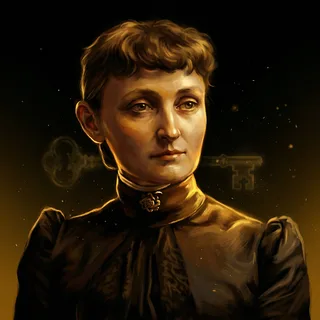
Emma Curtis Hopkins
Last updated: September 4, 2026
The mystical feminist who transformed New Thought from Christian Science's rebellious stepchild into an independent spiritual movement with its own ordination system and metaphysical theology.
Lived
1849 – 1925
Nationality
American
Tradition
New Thought
Known For
High Mysticism (1920-1924), Scientific Christian Mental Practice (1888)
Tone
Light-Leaning2 / 6
High-demand mystical discipline aimed at healing and empowerment.
Why Hopkins Matters
Hopkins didn't just break from Mary Baker Eddy: she created the institutional backbone of modern New Thought by ordaining hundreds of ministers who went on to found every major movement within the tradition. Her synthesis of Christian mysticism, practical metaphysics, and radical feminism gave New Thought both its organizational structure and its distinctive blend of high mysticism with everyday healing. Without Hopkins's theological innovations and ministerial network, there would be no Unity, no Religious Science, and no organized New Thought movement as we know it.
Start Here: The Reading Path
- Scientific Christian Mental Practice1888Hopkins's first major work systematizes her break from Christian Science into a practical healing method. Focus on her twelve lessons that move from basic metaphysics to advanced mystical states.Read this before High Mysticism to understand her foundational system, even though the later work is more profound.
- High Mysticism1920Her magnum opus presents twelve 'watches' or contemplative practices that lead from ordinary consciousness to mystical union. This is Hopkins at her most sophisticated, integrating Hermetic principles with Christian mysticism.
Core Ideas in 60 Seconds
- The highest God and the inmost God is one GodHopkins taught that divine consciousness exists both as transcendent reality and as the deepest truth of individual being, making mystical union both possible and natural.Christ Consciousness
- There is no absence of substance, intelligence, or life anywhereHer most radical departure from Christian Science was insisting that matter itself is divine substance, not illusion to be overcome.Substance
- The feminine principle in Deity is the Holy GhostHopkins pioneered New Thought feminism by identifying the creative, nurturing aspect of divinity as explicitly feminine.Divine Principle
- Every treatment is a prayer, and every prayer is a treatmentShe unified healing practice with mystical contemplation, making therapeutic work a form of spiritual realization.Treatment
Major Works
| Title | Year | What It Teaches | Best For |
|---|---|---|---|
| Scientific Christian Mental Practice | 1888 | The foundational twelve lessons that systematize metaphysical healing as an alternative to medical materialism and Christian Science orthodoxy. | Beginners seeking a systematic introduction to New Thought principles |
| High Mysticism | 1920 | Twelve mystical 'watches' that guide consciousness from ordinary awareness through progressive stages of spiritual realization to unity with the Absolute. | Advanced practitioners ready for sophisticated contemplative work |
Lineage & Influence
Influenced By
Hopkins studied directly under Mary Baker Eddy but broke decisively from Christian Science's denial of matter, drawing instead on the broader current of American Transcendentalism flowing from Ralph Waldo Emerson and the mental healing tradition of Phineas Parkhurst Quimby.
Influenced
Her ordination system created the leadership of modern New Thought: Charles and Myrtle Fillmore founded Unity after studying with her, while her students taught Ernest Holmes and influenced virtually every major New Thought leader through the mid-twentieth century.
Parallel Thinkers
While Helena Petrovna Blavatsky was synthesizing Eastern and Western esotericism in Theosophy, Hopkins was creating a distinctly American mystical Christianity that integrated Hermetic principles with practical metaphysics and feminist theology.
The Story
Emma Curtis Hopkins began as a promising student and editor for Mary Baker Eddy's Christian Science movement in the 1880s, but her independent theological thinking and sympathy for divorced women led to a decisive break. Rather than retreat, she established her own Christian Science Theological Seminary in Chicago, where she developed a more mystical and inclusive approach to mental healing that welcomed women as ordained ministers and treated matter as divine substance rather than illusion. For over three decades, her seminary became the training ground for New Thought leadership, with hundreds of her graduates founding churches, publishing houses, and healing practices across America. Her final years were spent crafting High Mysticism, a sophisticated contemplative system that represented the culmination of her synthesis of Christian mysticism, Hermetic philosophy, and practical metaphysics.
In Their Own Words
There is a pathway of the skies that reaches to every man's house. Every man may walk on the skyey pathway if he will. It is not far away. It is nearer than the ground whereon he treads.
High Mysticism
The twelve lessons of Scientific Christian Mental Practice lead the mind through a systematized course of training in the apprehension of truth, which, when thoroughly understood and practiced, will cure every ill to which flesh is heir.
Scientific Christian Mental Practice
Frequently Asked Questions
How did Emma Curtis Hopkins differ from Mary Baker Eddy?
Hopkins rejected Eddy's denial of matter as illusion, instead teaching that matter is divine substance. She also ordained women as ministers and welcomed divorced people, both forbidden in Christian Science.
Why is Emma Curtis Hopkins called the Teacher of Teachers?
Her Chicago seminary ordained hundreds of New Thought ministers between 1886 and 1918, including the founders of Unity, Religious Science, and most other major New Thought denominations. Her students literally created the movement's institutional structure.
What is High Mysticism about?
Hopkins's masterwork presents twelve contemplative practices called 'watches' that progressively train consciousness to recognize its unity with divine reality. It's both a mystical manual and a theological statement of her mature philosophy.
Was Emma Curtis Hopkins a feminist?
Yes, Hopkins pioneered New Thought feminism by identifying the Holy Spirit as feminine, ordaining women as ministers, and developing a theology that emphasized the divine feminine principle as co-equal with masculine aspects of deity.
Explore Further
The Master Key Experience
The books teach the law.
The Experience trains it.
A 24-week guided journey through the laws of mind: weekly gates, lessons drawn from the texts in this library, and a living companion that remembers you.
Begin the ExperienceFree · Begin without an account