
What is Thought-Form?
Last updated: July 12, 2026
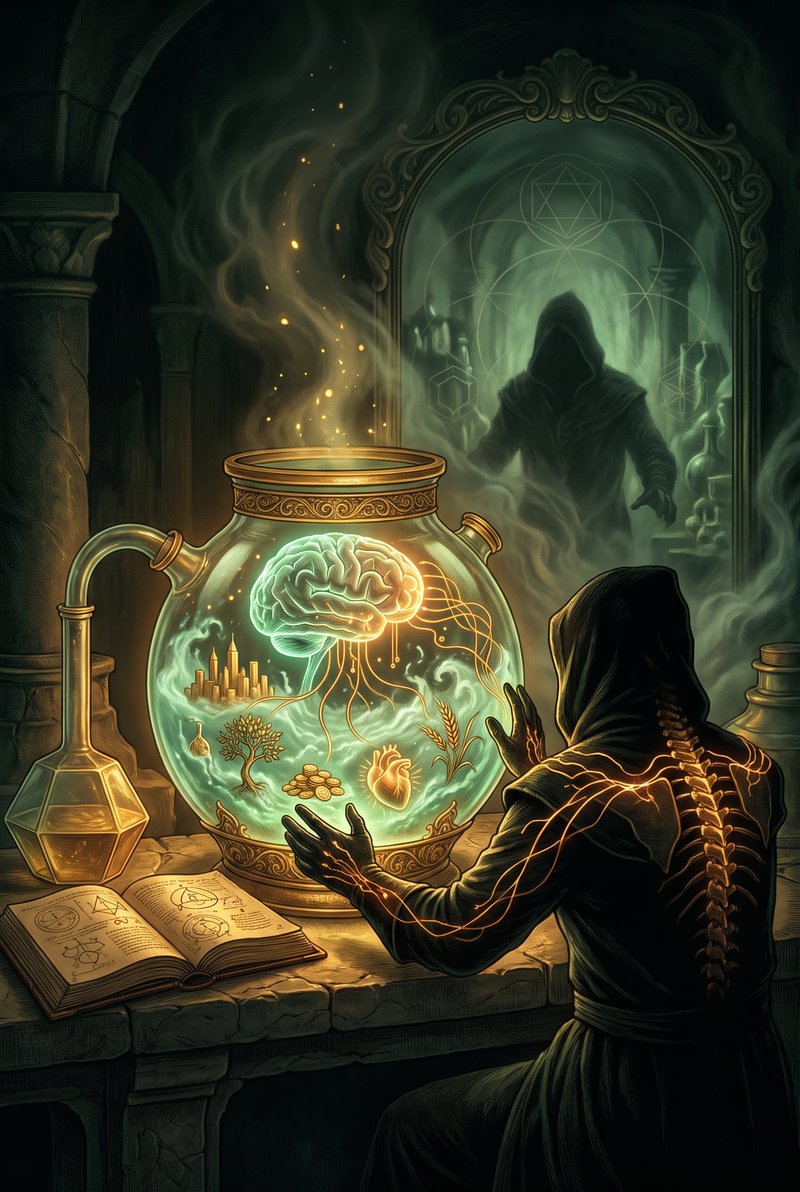
All thought has definite form on the subjective side of life. In esoteric tradition, concentrated thought creates energetic structures on the astral and mental planes.
Understanding Thought-Form in Universal
All thought has definite form on the subjective side of life. In esoteric tradition, concentrated thought creates energetic structures on the astral and mental planes.
The concept of 'Thought-Form' is central to many esoteric traditions, positing that thoughts are not merely ephemeral mental events but possess a tangible, albeit non-physical, existence. This idea gained prominence in the late 19th and early 20th centuries through the works of Theosophists like Annie Besant and C.W. Leadbeater, who extensively detailed the creation and characteristics of these energetic constructs. Understanding thought-forms is crucial for comprehending how consciousness interacts with and shapes reality, influencing both individual experience and collective environments. It underscores the profound responsibility inherent in mental activity, as every thought contributes to a subtle energetic landscape.
What the Teachers Say
Thought-Form vs. Thoughtless Action
While thought-forms represent the deliberate creation of mental structures through concentrated intention, thoughtless action occurs without conscious mental formation or purposeful direction. This comparison illuminates the difference between conscious creation and unconscious reactivity.
| Aspect | Thought-Form | Thoughtless Action |
|---|---|---|
| Mental Activity | Concentrated, focused, and deliberate | Scattered, automatic, or absent |
| Creation Process | Forms definite structures with lasting impact | Produces no lasting mental constructs |
| Consciousness Level | High awareness and intentional direction | Low awareness and unconscious response |
| Energetic Effect | Creates organized patterns in subtle matter | Disperses energy without coherent structure |
| Manifestation Power | Strong potential for materializing intentions | Minimal impact on external circumstances |
Etymology
The term 'Thought-Form' is a compound of two English words: 'thought' deriving from Old English 'þoht' or 'geþoht,' referring to the process or product of thinking, and 'form,' from Latin 'forma,' meaning shape or appearance. While the specific compound 'thought-form' emerged within esoteric literature, particularly Theosophy, the underlying concept of thoughts having an objective existence can be traced to ancient philosophical and spiritual traditions, where mental constructs were often considered to have a subtle, formative power.
How to Practice This
Practitioners apply the understanding of thought-forms through various techniques aimed at conscious creation and energetic hygiene. Meditation and visualization are primary methods, where individuals intentionally focus their minds to generate specific, positive thought-forms for desired outcomes, such as healing or manifestation. Conversely, awareness practices help in identifying and dissolving negative or unwanted thought-forms that may be unconsciously created or absorbed from the environment. This involves cultivating mindfulness to observe mental patterns and consciously redirecting destructive thought energy into constructive channels, thereby shaping one's inner and outer reality more effectively.
Connection to Manifestation
Thought-forms serve as the primary mechanism through which mental intention becomes physical reality in manifestation practice. When we visualize desired outcomes with emotional intensity and sustained focus, we create powerful thought-forms that act as energetic blueprints for material expression. These mental constructs continue working on subtle planes even after conscious attention shifts elsewhere, gradually attracting circumstances and opportunities that align with their programmed purpose. Mastering thought-form creation enables practitioners to manifest more effectively by ensuring their mental creations possess the clarity, persistence, and vibrational alignment necessary for successful materialization.
Frequently Asked Questions
The duration of thought-forms depends on the intensity of emotion, clarity of visualization, and frequency of reinforcement behind their creation. Simple thought-forms may dissipate within hours or days, while those charged with strong emotion and repeatedly reinforced can persist for months or years.
While thought-forms exist primarily on astral and mental planes invisible to ordinary sight, sensitive individuals may perceive them through clairvoyance, psychic impression, or emotional sensing. Most people unconsciously respond to the influence of thought-forms without consciously recognizing their presence.
Thought-forms can become problematic when created unconsciously through negative emotions or obsessive thinking, potentially creating self-perpetuating cycles of unwanted influence. However, deliberately created thought-forms under conscious control serve beneficial purposes when aligned with positive intentions and spiritual development.
Unwanted thought-forms are dissolved through withdrawing attention and emotional energy from them, replacing negative thinking patterns with positive ones, and using visualization techniques to consciously dissipate their structure. Some traditions employ specific banishing rituals or protective practices to clear accumulated mental debris.
Both spellings refer to the same concept of mental creations that take definite form on subtle planes. The hyphenated version emphasizes the compound nature of thought creating form, while the single word version treats it as a unified metaphysical concept.
Explore Further
Used by: Charles F. Haanel, Leadbeater, Mulford
The Master Key Experience
The books teach the law.
The Experience trains it.
A 24-week guided journey through the laws of mind: weekly gates, lessons drawn from the texts in this library, and a living companion that remembers you.
Begin the ExperienceFree · Begin without an account