
Table of ContentsWarren Felt Evans
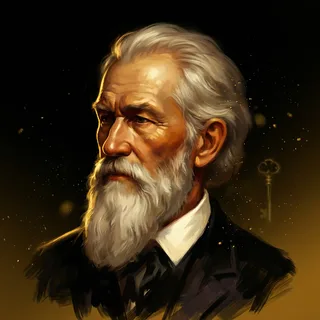
Warren Felt Evans
Last updated: September 4, 2026
The forgotten father of New Thought who transformed one healer's intuitions into a philosophical system that would reshape American spirituality.
Lived
1817 – 1889
Nationality
American
Tradition
New Thought
Known For
The Mental Cure (1869), Mental Medicine (1872), Soul and Body (1876)
Tone
Light-Leaning2 / 6
First New Thought author; Swedenborgian mental healing. Gentle and systematic.
Why Evans Matters
Evans stands as the crucial bridge between Phineas Quimby's healing practice and the entire New Thought movement. While Quimby worked through intuition and personal magnetism, Evans brought systematic thinking, drawing on Swedenborg's mystical Christianity to create the first coherent philosophy of mental healing. His work laid the intellectual foundation that Mary Baker Eddy, Emma Curtis Hopkins, and the Fillmores would build upon. Without Evans, New Thought might have remained a collection of healing techniques rather than becoming a transformative spiritual philosophy.
Start Here: The Reading Path
- The Mental Cure1869The foundational text that first systematized mental healing principles into a coherent philosophy. Evans shows how mind governs body through divine law, not mere positive thinking.Read slowly and note how Evans connects each healing principle to a deeper metaphysical truth.
- Mental Medicine1872A more developed treatment that integrates Swedenborgian correspondence theory with practical healing methods. This work shows Evans at his most philosophically sophisticated.Pay attention to how he uses Swedenborg's doctrine of correspondences to explain why mental states create physical conditions.
- Soul and Body1876His most systematic work on the relationship between spiritual and material existence. Here Evans fully develops his theory of how consciousness creates reality through divine principle.
Core Ideas in 60 Seconds
- Disease is a discord in the spiritual body which manifests in the physical through divine correspondenceEvans taught that illness begins in the spiritual realm and appears physically through natural law, making healing a matter of restoring spiritual harmony.Correspondence Law of
- The mind of man is a spiritual substance capable of impressing itself upon matterUnlike mere positive thinking, Evans grounded mental causation in metaphysical reality, where consciousness itself is a substantial force.Mental Science
- Christ represents the divine principle in man that makes healing possibleEvans interpreted Jesus not as unique savior but as the perfect example of humanity's inherent divine nature.Christ Consciousness
- The physician must become one with the patient in divine love to effect true healingHealing happens through spiritual communion, not mere technique, requiring the healer to recognize divine unity.Divine Mind
Major Works
| Title | Year | What It Teaches | Best For |
|---|---|---|---|
| The Mental Cure | 1869 | The foundational principles of how mind governs matter through divine law | Anyone wanting to understand New Thought's philosophical origins |
| Mental Medicine | 1872 | How Swedenborgian correspondence theory explains mental healing phenomena | Students interested in the mystical Christian roots of mental science |
| Soul and Body | 1876 | The complete metaphysical system underlying mind-body interaction | Advanced readers seeking systematic New Thought philosophy |
| The Divine Law of Cure | 1881 | Practical application of spiritual principles to physical healing | Practitioners wanting to understand the spiritual basis of therapeutic work |
| The Primitive Mind Cure | 1885 | How early Christianity practiced mental healing before theological corruption | Those interested in the historical precedents for New Thought healing |
Lineage & Influence
Influenced By
Evans learned healing techniques directly from Phineas Parkhurst Quimby but found philosophical framework in Emanuel Swedenborg's mystical Christianity, particularly the doctrine that spiritual states correspond to physical conditions.
Influenced
Evans directly shaped Mary Baker Eddy's early thinking before she developed Christian Science, while his systematic approach influenced Emma Curtis Hopkins and the entire lineage of New Thought teachers who followed.
Parallel Thinkers
While Ralph Waldo Emerson was developing Transcendentalism's idealism in philosophy, Evans was working out similar principles in healing practice, both drawing from Swedenborg's vision of divine-human correspondence.
The Story
Warren Felt Evans began as a Methodist minister in rural Vermont, but a crisis of faith led him to Swedenborg's mystical Christianity and its vision of divine-human correspondence. When chronic illness brought him to Phineas Quimby's healing practice in 1863, Evans experienced not just physical cure but philosophical revelation: here was proof that Swedenborg's spiritual principles operated as natural laws. Unlike other Quimby students who focused on technique, Evans saw the need for systematic philosophy. Over the next two decades, he produced the first coherent body of New Thought literature, translating Quimby's intuitive insights through Swedenborgian metaphysics. His work created the intellectual foundation that allowed mental healing to evolve from personal practice into a spiritual movement, establishing the philosophical vocabulary and systematic thinking that New Thought still uses today.
In Their Own Words
The body is but the external and lowest form of the soul, and diseases are spiritual before they are physical.
The Mental Cure
There is a divine method of cure, and it consists in the application of Christ's mind to the diseased body and soul of man.
Mental Medicine
Mind is the real man, and what we call matter is only mind in its external and lowest form of expression.
Soul and Body
Frequently Asked Questions
Did Warren Felt Evans study with Phineas Quimby?
Yes, Evans was healed by Quimby in 1863 and spent time learning his methods. Unlike other students, Evans focused on creating a systematic philosophy to explain Quimby's healing principles.
What is the difference between Warren Felt Evans and Mary Baker Eddy?
Both studied with Quimby, but Evans emphasized gradual philosophical development while Eddy claimed direct divine revelation. Evans remained closer to traditional Christianity while Eddy developed a more radical metaphysical system.
How did Emanuel Swedenborg influence Warren Felt Evans?
Swedenborg's doctrine of correspondence provided Evans the philosophical framework to explain how mental states create physical conditions. This gave theoretical grounding to Quimby's practical healing methods.
Is Warren Felt Evans considered the first New Thought author?
Yes, his 1869 book The Mental Cure is generally recognized as the first published systematic presentation of New Thought principles, making him the movement's founding literary figure.
Explore Further
The Master Key Experience
The books teach the law.
The Experience trains it.
A 24-week guided journey through the laws of mind: weekly gates, lessons drawn from the texts in this library, and a living companion that remembers you.
Begin the ExperienceFree · Begin without an account