
Table of ContentsThomas Troward
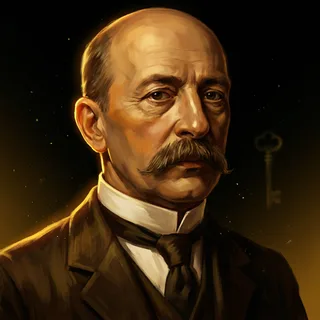
Thomas Troward
Last updated: September 4, 2026
The judge who gave New Thought its courtroom precision and logical backbone.
Lived
1847 – 1916
Nationality
British
Tradition
New Thought
Known For
The Edinburgh Lectures on Mental Science (1904), The Dore Lectures on Mental Science (1909), The Creative Process in the Individual (1910)
Tone
Balanced3 / 6
Judicial, abstract, impersonal mental science. Emotionally cool and intellectually precise.
Why Troward Matters
Troward transformed New Thought from intuitive speculation into systematic philosophy by applying rigorous legal reasoning to metaphysical principles. His clear distinction between objective and subjective mind became the foundation for all practical metaphysical work. Where others offered inspiration, Troward offered logical proof that mind creates reality according to discoverable laws. His influence extends through every major New Thought teacher who followed.
Start Here: The Reading Path
- The Edinburgh Lectures on Mental Science1904Start with this foundational text that establishes the basic principles with mathematical precision. Focus on lectures 2-4 which outline the objective-subjective mind distinction and the creative process.Read slowly and take notes. Troward builds each concept on the previous one like a legal argument.
- The Dore Lectures on Mental Science1909These lectures apply the Edinburgh principles to practical questions of healing, supply, and personal development with more accessible examples.
- The Creative Process in the Individual1910His most advanced work on how universal creative principle becomes individualized consciousness. Best saved for after mastering the earlier lectures.
Core Ideas in 60 Seconds
- The distinguishing quality of intelligence is the power of selectionIntelligence chooses what to focus on, and this selection determines what manifests in experience.Consciousness
- The subjective mind is the medium through which all manifestation takes placeThe subconscious accepts suggestions from the conscious mind without question and works to make them real.Subjective Mind
- Spirit is the only self-moving power and is pure affirmationThe fundamental creative force cannot negate itself and always moves toward expression and expansion.Originating Spirit
- The law works by the word, and the word is the expression of the intentionClear mental intention backed by understanding activates the creative law that governs manifestation.Mental Science
Major Works
| Title | Year | What It Teaches | Best For |
|---|---|---|---|
| The Edinburgh Lectures on Mental Science | 1904 | The foundational principles of how mind operates as the creative force in the universe | Anyone serious about understanding New Thought philosophy |
| The Dore Lectures on Mental Science | 1909 | Practical applications of mental science principles to daily life and specific problems | Students ready to apply Edinburgh principles practically |
| The Creative Process in the Individual | 1910 | Advanced metaphysics of how universal consciousness becomes individualized awareness | Advanced students seeking deeper philosophical understanding |
Lineage & Influence
Influenced By
Troward synthesized insights from his legal training with metaphysical principles he encountered during his judicial service in India, though he rarely cited specific influences, preferring to present principles as self-evident logical deductions.
Influenced
Ernest Holmes built Religious Science directly on Troward's framework, while the entire New Thought movement adopted his objective-subjective mind distinction and systematic approach to metaphysical causation.
Parallel Thinkers
Like William James, Troward brought academic rigor to consciousness studies, though Troward focused on practical metaphysics rather than psychology. Both sought to establish mental phenomena on scientific foundations.
The Story
Thomas Troward retired from the Indian civil service as a divisional judge, but his real career began when he returned to England and started questioning the nature of mind and reality. His judicial training had taught him to examine evidence carefully and build arguments step by step, skills he now applied to the deepest questions of existence. In 1904, he delivered a series of lectures in Edinburgh that would become his masterpiece, presenting New Thought principles with the precision of a legal brief. Where other metaphysical teachers relied on inspiration and testimony, Troward offered logical proofs that mind creates reality according to discoverable laws. He spent his final years refining this system, convinced that he had found the scientific basis for the creative power of thought. His work provided the intellectual foundation that allowed New Thought to evolve from a healing movement into a comprehensive philosophy of life.
In Their Own Words
The action of Mind plants that nucleus which, if allowed to grow undisturbed, will eventually attract to itself all the conditions necessary for its manifestation in outward visible form.
The Edinburgh Lectures on Mental Science
The distinguishing quality of intelligence is the power of selection.
The Edinburgh Lectures on Mental Science
What we are to do is to supply the right idea, and the right idea will produce the right result.
The Dore Lectures on Mental Science
Frequently Asked Questions
What is the difference between objective and subjective mind according to Troward?
The objective mind reasons inductively from facts to general principles and can accept or reject ideas. The subjective mind accepts whatever the objective mind impresses upon it and works deductively to manifest those impressions in experience.
How did Troward influence Ernest Holmes and Religious Science?
Holmes called Troward his primary philosophical influence and built the entire Religious Science system on Troward's principles. The Science of Mind textbook extensively quotes Troward and adopts his systematic approach to metaphysical law.
Why did William James praise Troward's Edinburgh Lectures?
James appreciated Troward's logical rigor and systematic presentation of metaphysical principles. Unlike other New Thought writers who relied mainly on inspiration, Troward offered careful reasoning that appealed to James's academic standards.
What makes Troward different from other New Thought authors?
Troward brought judicial precision and logical methodology to New Thought, creating systematic proofs rather than inspirational assertions. His legal training enabled him to build a coherent philosophical framework that others could follow and develop.
Works in the Library



Explore Further
Related Authors
The Master Key Experience
The books teach the law.
The Experience trains it.
A 24-week guided journey through the laws of mind: weekly gates, lessons drawn from the texts in this library, and a living companion that remembers you.
Begin the ExperienceFree · Begin without an account