
Table of ContentsJames Allen
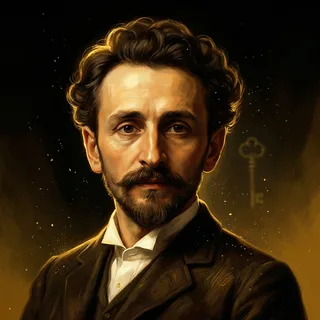
James Allen
Last updated: September 4, 2026
The man who turned ancient philosophy into practical psychology, distilling the entire New Thought movement into crystalline prose that still cuts through modern self-help fluff.
Lived
1864 – 1912
Nationality
British
Tradition
New Thought
Known For
As a Man Thinketh (1903), From Poverty to Power (1901), The Path of Prosperity (1905)
Tone
Light-Leaning2 / 6
Meditative and literary. Positive but morally serious about thought-consequences.
Why Allen Matters
Allen accomplished what few spiritual writers ever do: he made profound ideas genuinely accessible without dumbing them down. His literary background allowed him to craft sentences that stick in memory and transform thinking patterns through sheer elegance. While other New Thought authors got lost in metaphysical speculation, Allen focused relentlessly on the practical mechanics of how thoughts create character and circumstances. His influence shaped everyone from Napoleon Hill to Norman Vincent Peale, yet his own voice remains distinctly philosophical rather than promotional.
Start Here: The Reading Path
- As a Man Thinketh1903Start here because it's Allen at his most concentrated and powerful. The entire book can be read in an hour, but each chapter deserves weeks of contemplation. Focus on how he builds the argument systematically from thought to character to circumstances.Read it twice: once quickly for the overall argument, then slowly, one chapter per week, applying the ideas daily.
- From Poverty to Power1901His most comprehensive work, showing how the principles in 'As a Man Thinketh' apply to every area of life. Part One covers the spiritual foundation, Part Two the practical applications. This reveals Allen's full philosophical system.The two parts were originally separate books. Read Part One first to establish the metaphysical foundation.
Core Ideas in 60 Seconds
- A man is literally what he thinks, his character being the complete sum of all his thoughtsCharacter is not inherited or imposed by circumstances, but built thought by thought through consistent mental patterns.Consciousness
- Circumstances do not make the man; they reveal him to himselfExternal conditions are the outward expression of internal states, serving as mirrors rather than causes.Law of Attraction
- Man is the master of thought, the moulder of character, and the maker and shaper of condition, environment, and destinyHuman beings possess complete creative authority over their experience through conscious direction of mental activity.Creative Process
- The dreamers are the saviors of the worldVisionary thinking and idealization are not escapism but the fundamental forces that reshape reality.Idealization
Major Works
| Title | Year | What It Teaches | Best For |
|---|---|---|---|
| As a Man Thinketh | 1903 | The foundational principle that thoughts create character and circumstances through natural law. | Everyone; this is the essential Allen text |
| From Poverty to Power | 1901 | The complete spiritual path from inner transformation to outer mastery. | Those wanting Allen's full philosophical system |
| The Path of Prosperity | 1905 | How right thinking naturally leads to material and spiritual abundance. | Readers focused on practical success applications |
Lineage & Influence
Influenced By
Allen drew heavily from Ralph Waldo Emerson's transcendentalist philosophy and Emanuel Swedenborg's correspondence doctrine, filtering these through his deep study of Buddhist and Hindu texts. His literary style reflects the influence of Marcus Aurelius and other classical moralists.
Influenced
His concise, aphoristic style directly shaped Napoleon Hill's approach in 'Think and Grow Rich,' while his psychological focus influenced Norman Vincent Peale and the entire positive thinking movement. The self-help industry's emphasis on personal responsibility traces back to Allen's formulations.
Parallel Thinkers
Thomas Troward was developing similar ideas about mental causation at the same time, though with more theological complexity. Wallace D. Wattles worked parallel themes in 'The Science of Getting Rich,' but with more mechanical emphasis where Allen remained philosophical.
The Story
James Allen began his working life as a private secretary in Birmingham, but a series of family tragedies, including his father's death when James was fifteen, forced him into menial jobs to support his family. These early struggles with poverty and limitation became the laboratory for his philosophical investigations. He spent his spare time studying philosophy, religion, and poetry, gradually developing the insights that would make him famous. In 1898, he moved to the seaside town of Ilfracombe, where he dedicated himself entirely to writing, producing nineteen books in just over a decade. Allen lived simply, often writing in a small hut overlooking the sea, and died at forty-eight, just as his influence was beginning to spread worldwide. His widow Lily continued publishing his work and running the magazine he had founded, ensuring his ideas reached the vast audience that would make 'As a Man Thinketh' one of the most reprinted books in history.
In Their Own Words
A man is literally what he thinks, his character being the complete sum of all his thoughts.
As a Man Thinketh
Circumstances do not make the man; they reveal him to himself.
As a Man Thinketh
The dreamers are the saviors of the world.
As a Man Thinketh
He who would accomplish little must sacrifice little; he who would achieve much must sacrifice much.
As a Man Thinketh
Frequently Asked Questions
What is James Allen's most famous book?
'As a Man Thinketh' (1903) is by far his most famous and influential work. Despite being only about 70 pages long, it has sold millions of copies and influenced countless self-help authors.
How does James Allen differ from other New Thought authors?
Allen's background in literature gave him a more refined, philosophical writing style compared to the often promotional tone of other New Thought writers. He focused on character development rather than material gain, and his arguments are more systematic and logical.
Did James Allen believe in the law of attraction?
Yes, though he didn't use that specific term. Allen taught that thoughts attract corresponding circumstances through natural law, but he emphasized that this process works through character development rather than mere wishful thinking.
Was James Allen religious?
Allen was deeply spiritual but not conventionally religious. He drew from Christianity, Buddhism, and Hindu philosophy, focusing on universal principles rather than sectarian doctrines. His approach was more philosophical than theological.
Works in the Library

Explore Further
The Master Key Experience
The books teach the law.
The Experience trains it.
A 24-week guided journey through the laws of mind: weekly gates, lessons drawn from the texts in this library, and a living companion that remembers you.
Begin the ExperienceFree · Begin without an account