
Table of ContentsEliphas Levi
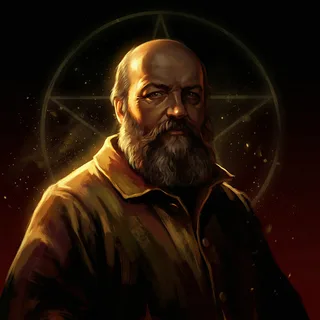
Eliphas Levi
Last updated: September 4, 2026
The magician who turned scattered medieval symbols into the grammar of modern occultism.
Lived
1810 – 1875
Nationality
French
Tradition
Ceremonial Magic
Known For
Transcendental Magic (1856), The Key of the Mysteries (1861)
Tone
Shadow-Leaning4.5 / 6
Created the Baphomet image, codified pentagram orientations, described black vs white magic in detail. Morally serious but imagery is unmistakably shadow-heavy.
Why Levi Matters
Levi transformed Western esotericism from a collection of antiquarian curiosities into a coherent magical system. He codified the symbolic language that every subsequent occultist would speak, from Tarot correspondences to pentagram orientations. More importantly, he bridged the gap between medieval grimoire tradition and modern psychological occultism, making magic intellectually respectable for the 19th century mind. Without Levi's systematic approach, there would be no Golden Dawn, no modern Tarot, and no coherent tradition of ceremonial magic.
Start Here: The Reading Path
- Transcendental Magic1856Levi's masterwork lays out his complete magical philosophy in two parts: doctrine and ritual. Focus on his redefinition of magic as applied will operating through trained imagination. Pay special attention to his discussion of the astral light and his systematic approach to Tarot correspondences.Read the doctrine sections first to grasp his theoretical framework before diving into the practical rituals.
Core Ideas in 60 Seconds
- Magic is the science of nature hidden from the profaneLevi positioned magic as a legitimate field of study with discoverable laws, not mere superstition.Magick
- The astral light is the universal medium through which magical operations workHe theorized a subtle substance permeating all space that responds to trained will and imagination.Astral Plane
- The Tarot contains the complete keys to magical knowledgeLevi systematized Tarot as a comprehensive symbolic system encoding all esoteric wisdom.Correspondence Law of
- Will trained by knowledge and made manifest through ritual is the essence of magical powerHe emphasized rigorous mental discipline over natural psychic gifts as the path to magical effectiveness.Will
Major Works
| Title | Year | What It Teaches | Best For |
|---|---|---|---|
| Transcendental Magic | 1856 | The complete philosophical and practical system of ceremonial magic. | Anyone serious about understanding the foundations of modern occultism |
| The Key of the Mysteries | 1861 | The deeper philosophical implications of magical practice and its relationship to religion. | Advanced readers interested in Levi's mature philosophical synthesis |
Lineage & Influence
Influenced By
Levi drew heavily from Agrippa von Nettesheim's systematic approach to correspondences and Paracelsus's understanding of the subtle forces in nature. His vision of magic as applied psychology shows clear debts to the emerging spiritualist movement of his era.
Influenced
S.L. MacGregor Mathers built the Golden Dawn's entire curriculum around Levi's systematic approach to magic, while Aleister Crowley considered himself Levi's magical heir. Arthur Edward Waite's Tarot work directly extends Levi's symbolic innovations.
Parallel Thinkers
Papus worked similar territory in France, systematizing occult knowledge for modern practitioners, though with less lasting influence. Helena Petrovna Blavatsky shared Levi's ambition to create a universal esoteric synthesis, but focused more on Eastern wisdom traditions.
The Story
Born Alphonse Louis Constant to a poor Parisian shoemaker, the future Eliphas Levi began as a Catholic seminarian with revolutionary sympathies. His radical political writings and romantic entanglements ended his clerical career, but his crisis of faith led him to discover in occultism what orthodox religion had failed to provide: a coherent system for understanding the hidden forces of existence. Taking the Hebrew name Eliphas Levi Zahed, he spent his mature years synthesizing centuries of scattered magical knowledge into the systematic doctrines that would define modern ceremonial magic. His genius lay not in psychic powers or mystical experiences, but in his ability to organize symbolic correspondences into teachable principles that transformed magic from superstition into a coherent discipline.
In Their Own Words
Magic is the traditional science of the secrets of Nature which has been transmitted to us from the Magi.
Transcendental Magic
To practice magic is to be a quack; to know magic is to be a sage.
Transcendental Magic
The empire of the will over the imagination, and by means of the imagination over the senses and instincts, constitutes the secret of all magical operations.
Transcendental Magic
Frequently Asked Questions
Did Eliphas Levi create the modern image of Baphomet?
Yes, Levi's famous illustration of Baphomet as the sabbatic goat became the standard occult representation. He intended it as a symbol of the equilibrium of opposites, though it was later misappropriated by those who didn't understand his philosophical meaning.
What is Eliphas Levi's connection to the Tarot?
Levi was the first to systematically connect the Tarot to Hebrew letters and Kabbalistic concepts, creating the foundation for all subsequent occult Tarot interpretation. His correspondences became standard in the Golden Dawn and influenced every major Tarot deck that followed.
Was Eliphas Levi actually a practicing magician?
Levi claimed to have performed magical operations, including a famous evocation of Apollonius of Tyana, but he was primarily a theorist and systematizer. His lasting contribution was intellectual rather than practical, organizing magical knowledge into teachable principles.
Explore Further
The Master Key Experience
The books teach the law.
The Experience trains it.
A 24-week guided journey through the laws of mind: weekly gates, lessons drawn from the texts in this library, and a living companion that remembers you.
Begin the ExperienceFree · Begin without an account