
Table of ContentsAgrippa von Nettesheim
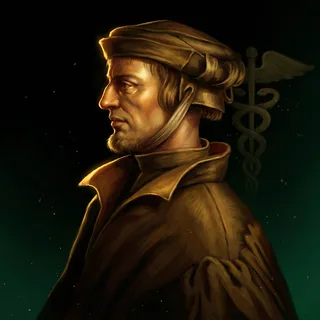
Agrippa von Nettesheim
Last updated: September 4, 2026
The architect who built the blueprint for all Western magic, transforming scattered Renaissance traditions into one systematic science of the soul.
Lived
1486 – 1535
Nationality
German
Tradition
Hermeticism
Known For
Three Books of Occult Philosophy (1531-1533)
Tone
Shadow-Leaning4 / 6
Systematic compilation including demonic names and necromantic references. Framed as pious philosophy, but vast in scope.
Why Nettesheim Matters
Agrippa created the intellectual foundation that every ceremonial magician since has built upon. His Three Books of Occult Philosophy wasn't just another grimoire: it was the first systematic attempt to explain how magic actually works through natural law rather than mere superstition. He synthesized Hermetic principles, Neoplatonic emanation theory, and Kabbalistic correspondences into a coherent framework that influenced everyone from John Dee to modern Golden Dawn practitioners. Without Agrippa's conceptual architecture, Western esotericism would have remained a collection of fragments rather than becoming a tradition.
Start Here: The Reading Path
- Three Books of Occult Philosophy1533Start with Book One, which covers natural magic and the correspondence between earthly and celestial realms. This is where Agrippa lays out his fundamental theory that magic works through sympathy and correspondence, not supernatural intervention.Read the Heinrich Morley translation, but keep Donald Tyson's modern edition nearby for context and commentary.
Core Ideas in 60 Seconds
- Magic is natural philosophy carried to its logical conclusionAgrippa argued that magic wasn't supernatural but rather the highest application of understanding natural correspondences and hidden sympathies.As Above So Below
- The threefold world operates through interconnected planes of natural, celestial, and intellectual magicHis systematic division of magical practice into three books corresponding to the physical world, stellar influences, and angelic intelligences became the standard framework.Correspondence Law of
- The magician must purify himself through learning, virtue, and religious devotion to access higher powersUnlike later grimoires focused on technique, Agrippa insisted that magical power required intellectual and moral development.Magick
- All things are connected through occult virtues and sympathies that the wise can learn to manipulateHis theory of correspondences showed how planets, herbs, stones, and human faculties all participate in universal patterns of influence.Occult
Major Works
| Title | Year | What It Teaches | Best For |
|---|---|---|---|
| Three Books of Occult Philosophy | 1533 | A complete system of natural, celestial, and ceremonial magic based on Hermetic correspondence theory. | Serious students of Western magical tradition and Renaissance thought |
| On the Uncertainty and Vanity of the Sciences | 1530 | A skeptical critique of human knowledge that paradoxically defends the possibility of divine illumination. | Readers interested in Renaissance skepticism and the relationship between reason and faith |
Lineage & Influence
Influenced By
Agrippa synthesized the magical writings attributed to Hermes Trismegistus, the Neoplatonic theology of Marsilio Ficino, and the Christian Kabbalah of Pico della Mirandola into his systematic framework. He drew heavily on medieval Arabic magical texts and the emerging humanist scholarship of his time.
Influenced
His systematic approach to magic influenced virtually every subsequent ceremonial magician, from John Dee's Enochian work to modern Golden Dawn practitioners like S.L. MacGregor Mathers and Arthur Edward Waite. Eliphas Levi built directly on Agrippa's correspondences, while Aleister Crowley's theoretical framework owes much to Agrippa's threefold division.
Parallel Thinkers
His contemporary Paracelsus worked on similar theories of correspondence and sympathetic magic, though focused more on medical applications. Giordano Bruno developed parallel ideas about the animation of nature and the power of imagination, though with more emphasis on cosmic philosophy than practical magic.
The Story
Heinrich Cornelius Agrippa was born into a world where the boundaries between science, philosophy, and magic had not yet hardened. Trained as a scholastic philosopher but swept up in the Renaissance recovery of ancient wisdom, he spent his life trying to reconcile Christian theology with Hermetic magic and Kabbalistic mysticism. His restless career took him from German universities to the court of Margaret of Austria, always seeking patrons who would support his controversial synthesis of forbidden knowledge with orthodox learning. The Three Books of Occult Philosophy, published near the end of his life, represented the culmination of decades spent collecting, organizing, and systematizing the scattered fragments of magical tradition into a coherent science. Yet even as he completed this monumental work, Agrippa was writing another book attacking the vanity of all human learning, suggesting the profound tension between his roles as scholar and mystic. He died in poverty, having sacrificed worldly success for the pursuit of hidden wisdom, but his intellectual legacy became the foundation upon which all subsequent Western ceremonial magic was built.
In Their Own Words
Whosoever therefore would learn magic, let him first learn natural philosophy, then mathematics, then optics, music, astrology, and then magic.
Three Books of Occult Philosophy, Book I
Every inferior is governed by its superior, and receiveth the influence of the virtue thereof, so that the very original, and chief worker of all things is the One only God.
Three Books of Occult Philosophy, Book I
Frequently Asked Questions
What is Agrippa's Three Books of Occult Philosophy about?
It's a systematic encyclopedia of Renaissance magical theory, divided into natural magic (Book I), celestial magic (Book II), and ceremonial magic (Book III). Agrippa attempted to show how magic works through natural correspondences rather than supernatural intervention.
Did Agrippa really practice magic or was he just a scholar?
Agrippa was both a practicing magician and a theoretical systematizer. He conducted practical magical operations and served as court astrologer, but his lasting contribution was organizing magical knowledge into a coherent philosophical framework rather than just collecting spells.
How did Agrippa influence modern occultism?
His systematic approach to correspondences and his threefold division of magical practice became the template for virtually all subsequent ceremonial magic. Groups like the Golden Dawn built directly on his theoretical foundations, and his influence extends through modern chaos magic and ceremonial traditions.
Was Agrippa a Christian or a heretic?
Agrippa considered himself a Christian throughout his life and tried to reconcile magical practice with orthodox theology. However, his synthesis of pagan philosophy and Christian doctrine put him in constant conflict with church authorities, forcing him to seek protection from secular patrons.
Explore Further
The Master Key Experience
The books teach the law.
The Experience trains it.
A 24-week guided journey through the laws of mind: weekly gates, lessons drawn from the texts in this library, and a living companion that remembers you.
Begin the ExperienceFree · Begin without an account