
Table of ContentsPapus
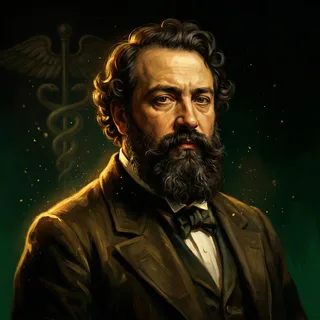
Papus
Last updated: September 4, 2026
The architect who gave French occultism its institutional backbone and made Tarot a science.
Lived
1865 – 1916
Nationality
French
Tradition
Occultism
Known For
The Tarot of the Bohemians (1889), Traite Elementaire de Science Occulte (1888)
Tone
Shadow-Leaning4 / 6
Encyclopedic French occultism including goetic material, within a moralizing Catholic frame.
Why Papus Matters
Papus transformed occultism from scattered curiosities into systematic practice. He built the organizational structures that kept Western esotericism alive through the modern era, founding the Martinist Order and establishing rigorous curricula for occult study. Where others philosophized, Papus organized. His work on Tarot created the template for every serious deck and interpretation system that followed.
Start Here: The Reading Path
- The Tarot of the Bohemians1889The foundational text that established Tarot as a coherent system of mystical knowledge rather than mere fortune-telling. Focus on his systematic correspondence between cards, Kabbalah, and hermetic principles.Read the theoretical sections first, then work through his card interpretations with an actual deck.
- Traite Elementaire de Science Occulte1888His comprehensive introduction to occult science that served as the curriculum for Martinist study groups across Europe. This shows his pedagogical approach to esoteric knowledge.
Core Ideas in 60 Seconds
- Tarot is the key to all occult sciences, containing in symbolic form the complete synthesis of hermetic wisdomHe argued that the 78 Tarot cards encode the entire structure of reality according to Kabbalistic and hermetic principles.Kabbalah
- Occultism must be organized into schools and orders to preserve and transmit authentic knowledgeUnlike solitary mystics, he believed esoteric wisdom required institutional structures to survive and flourish.Occult
- The microcosm reflects the macrocosm through precise correspondences that can be scientifically mappedHe created detailed charts showing how human anatomy, planetary influences, and cosmic forces mirror each other exactly.As Above So Below
- True initiation requires both theoretical study and practical application under qualified guidanceHe structured Martinist degrees around graduated instruction combining intellectual understanding with experiential work.Great Work
Major Works
| Title | Year | What It Teaches | Best For |
|---|---|---|---|
| The Tarot of the Bohemians | 1889 | How Tarot encodes the complete structure of hermetic philosophy and practical divination | Anyone serious about understanding Tarot beyond surface meanings |
| Traite Elementaire de Science Occulte | 1888 | A systematic curriculum for occult study covering astrology, Kabbalah, and practical magick | Students wanting a comprehensive foundation in French occult tradition |
Lineage & Influence
Influenced By
Eliphas Levi provided his theoretical framework for magic and Kabbalah, while the anonymous Kabbalistic text Sepher Yetzirah shaped his understanding of cosmic correspondences.
Influenced
S.L. MacGregor Mathers incorporated his Tarot work into Golden Dawn teachings, while Arthur Edward Waite built directly on his card interpretations for the Rider-Waite deck that dominates modern Tarot.
Parallel Thinkers
Helena Petrovna Blavatsky was simultaneously building Theosophical institutions while he constructed Martinist orders, though she focused on Eastern wisdom while he championed Western hermetic tradition.
The Story
Gerard Encausse discovered his calling when tuberculosis forced him from medical studies into the occult libraries of Paris. Taking the magical name Papus from a spirit mentioned in Agrippa, he found French esotericism fractured into competing personalities and scattered theories. His genius lay not in original philosophy but in systematic organization. He founded the Martinist Order in 1891, established L'Initiation magazine, and created study curricula that trained thousands across Europe. While contemporaries like Stanislas de Guaita engaged in magical duels and dramatic pronouncements, Papus built institutions that outlasted them all. His Tarot work transformed scattered medieval cards into a coherent system of mystical instruction. He served as court physician to Tsar Nicholas II, bringing French occultism to Russian aristocracy, but died in 1916 serving as a military doctor, having given Western esotericism the organizational backbone it needed to survive into the modern era.
In Their Own Words
The Tarot is a philosophical machine, which keeps the mind from wandering, while leaving it initiative and liberty; it is mathematics applied to the Absolute, the alliance of the positive and the ideal, a lottery of thoughts as exact as numbers.
The Tarot of the Bohemians
The duty of the occultist is to build up a scientific and precise doctrine which shall give to the modern world the same certainties that the ancients possessed.
Traite Elementaire de Science Occulte
Frequently Asked Questions
What is Papus best known for in modern occultism?
Papus is most famous for systematizing Tarot interpretation and founding the Martinist Order. His book 'The Tarot of the Bohemians' remains the foundation for most serious Tarot study today.
How did Papus influence modern Tarot decks?
His systematic correspondences between Tarot cards, Kabbalah, and astrology became the template that Arthur Edward Waite used for the Rider-Waite deck. Most modern Tarot interpretation traces back to his work.
What was the Martinist Order that Papus founded?
The Martinist Order was an initiatory organization focused on Christian mysticism and hermetic philosophy. It provided structured degrees of instruction in occult sciences and became a model for other esoteric orders.
Was Papus connected to the Russian royal family?
Yes, Papus served as an occult advisor and physician to Tsar Nicholas II and his family. He was consulted on mystical matters and even performed magical operations for the royal court before the Russian Revolution.
Explore Further
The Master Key Experience
The books teach the law.
The Experience trains it.
A 24-week guided journey through the laws of mind: weekly gates, lessons drawn from the texts in this library, and a living companion that remembers you.
Begin the ExperienceFree · Begin without an account