
Table of ContentsS.L. MacGregor Mathers
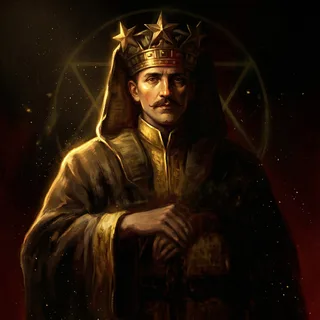
S.L. MacGregor Mathers
Last updated: September 4, 2026
The magician who built the blueprint for modern ceremonial magic and created the most influential occult order in Western history.
Lived
1854 – 1918
Nationality
British
Tradition
Ceremonial Magic
Known For
The Kabbalah Unveiled (1887), The Key of Solomon the King (1889), The Book of the Sacred Magic of Abramelin the Mage (1897)
Tone
Shadow-Leaning4.5 / 6
Translated Abramelin and Key of Solomon. Angelic and demonic hierarchies. Intense, hierarchical, power-focused.
Why Mathers Matters
Mathers didn't just practice magic, he architected it. Where others collected fragments of esoteric tradition, he synthesized Kabbalah, Egyptian mysteries, Enochian angels, and Rosicrucian wisdom into a coherent initiatory system that trained a generation of occultists. The Golden Dawn's grade structure, ritual framework, and magical curriculum became the DNA of modern ceremonial magic. His meticulous translations of grimoires like the Key of Solomon rescued medieval magical texts from obscurity and made them accessible to serious practitioners.
Start Here: The Reading Path
- The Kabbalah Unveiled1887Mathers' translation of the Zohar's key sections remains the most readable introduction to Kabbalistic philosophy for Western occultists. Focus on his lengthy introduction, which explains how Kabbalah provides the theoretical foundation for all magical work.Don't try to memorize the Hebrew terms on first reading. Focus on understanding the Tree of Life as a map of consciousness.
- The Key of Solomon the King1889His translation of this medieval grimoire shows Mathers' approach to practical ceremonial magic. Pay attention to his notes, which reveal how he adapted ancient techniques for modern practitioners.This is a manual, not philosophy. Read it to understand the mindset and methodology of ceremonial magic, not necessarily to perform the operations.
Core Ideas in 60 Seconds
- Magic is a science based on correspondence between macrocosm and microcosmMathers taught that magical operations work because the magician, properly trained and prepared, can manipulate universal forces through precise ritual action.As Above So Below
- Initiation must be gradual and systematic, building knowledge and power step by stepThe Golden Dawn's ten-grade system reflects Mathers' belief that magical development requires structured progression through increasingly complex teachings.Great Work
- The magician works through trained will, purified desire, and exact knowledgeMathers emphasized that successful magic requires not just ritual technique but psychological preparation and intellectual understanding of correspondences.Will
- Ancient wisdom traditions contain practical techniques that can be reconstructed and appliedHis translations and adaptations of medieval grimoires demonstrated that historical magical texts contain workable methods, not just superstition.Hermeticism
Major Works
| Title | Year | What It Teaches | Best For |
|---|---|---|---|
| The Kabbalah Unveiled | 1887 | How Kabbalistic philosophy provides the theoretical foundation for understanding divine emanation and magical correspondence | Anyone serious about Western esoteric tradition |
| The Key of Solomon the King | 1889 | Classical methods of ceremonial magic including invocation, talismanic work, and spirit communication | Practitioners interested in traditional ceremonial techniques |
| The Book of the Sacred Magic of Abramelin the Mage | 1897 | An intensive system for achieving knowledge and conversation with one's Holy Guardian Angel through extended magical operation | Advanced practitioners ready for serious magical undertaking |
Lineage & Influence
Influenced By
Mathers drew heavily on Eliphas Levi's revival of magical philosophy and was influenced by the Societas Rosicruciana in Anglia, though he synthesized these sources into something entirely new. His work built on medieval grimoires and Kabbalistic texts that he painstakingly translated from Latin, Hebrew, and French manuscripts.
Influenced
Aleister Crowley learned his foundational magical training in Mathers' Golden Dawn before breaking away to form his own system. Dion Fortune adapted Golden Dawn techniques for her Society of the Inner Light. Israel Regardie preserved and published the complete Golden Dawn curriculum, ensuring Mathers' system would survive into the modern era.
Parallel Thinkers
While Arthur Edward Waite worked on similar translations and operated within the Golden Dawn, he favored mystical symbolism over practical magic, creating ongoing tension with Mathers' more operational approach. Papus in France was developing parallel magical organizations, though with less systematic rigor than Mathers' grade structure.
The Story
Samuel Liddell MacGregor Mathers began as a clerk and amateur scholar with an obsession for ancient texts, teaching himself Latin, Hebrew, and French to unlock medieval grimoires that others dismissed as superstition. When he co-founded the Golden Dawn in 1888, he wasn't content to simply collect esoteric fragments but insisted on creating a complete initiatory system that could actually train magicians. Working from a tiny flat in London, then later from Paris where he styled himself Comte de Glenstrae, Mathers built the order's entire curriculum by weaving together Kabbalistic philosophy, Enochian angel magic, Egyptian symbolism, and Rosicrucian imagery into ten progressive grades. His autocratic leadership style eventually fractured the order, but not before he had trained a generation of occultists who would carry his methods across the globe. He died in Paris in 1918, leaving behind the most influential magical curriculum in Western history and translations of grimoires that remain standard texts over a century later.
In Their Own Words
Magic is the science of the control of the secret forces of nature.
The Golden Dawn rituals
The initiated man is he who possesses, in addition to his exoteric religious knowledge, the esoteric science and practical knowledge of the divine powers.
The Kabbalah Unveiled
Frequently Asked Questions
What is the Golden Dawn and why was it important?
The Golden Dawn was a ceremonial magic order founded in 1888 that created the most systematic and influential magical curriculum in modern Western history. Mathers designed its ten-grade structure to progressively train students in Kabbalah, ritual magic, divination, and spiritual development.
Did Mathers really translate ancient grimoires or did he make them up?
Mathers worked from genuine medieval manuscripts in the British Museum and private collections, though he adapted and interpreted them for modern practitioners. His translations of texts like the Key of Solomon remain scholarly accurate while making the material accessible.
Why did Aleister Crowley break away from Mathers and the Golden Dawn?
Crowley clashed with Mathers over leadership and direction of the order, particularly after Mathers expelled him in 1900. Crowley went on to develop his own magical system (Thelema) that built on Golden Dawn foundations while rejecting Mathers' authority.
Explore Further
The Master Key Experience
The books teach the law.
The Experience trains it.
A 24-week guided journey through the laws of mind: weekly gates, lessons drawn from the texts in this library, and a living companion that remembers you.
Begin the ExperienceFree · Begin without an account