
Table of ContentsArthur Edward Waite
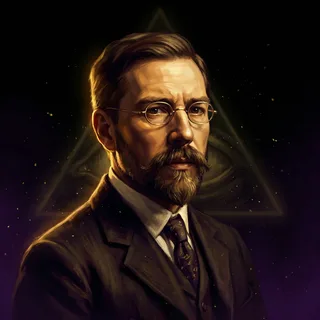
Arthur Edward Waite
Last updated: September 4, 2026
The scholar who gave Tarot its spiritual gravitas and rescued Western mysticism from theatrical excess.
Lived
1857 – 1942
Nationality
British-American
Tradition
Occultism
Known For
The Pictorial Key to the Tarot (1910), The Holy Kabbalah (1929), The Book of Ceremonial Magic (1911)
Tone
Balanced3.5 / 6
Golden Dawn scholar emphasizing mystical contemplation. Heavy material, devotional orientation.
Why Waite Matters
Waite transformed how we understand the Tarot from fortune-telling parlor trick to profound spiritual system, creating the most influential deck in history. More importantly, he distilled the esoteric tradition's genuine mystical content from its ceremonial theatrics, becoming the Golden Dawn's most thoughtful voice. His scholarly approach to Kabbalah and Christian mysticism bridged ancient wisdom and modern practice, making complex esoteric ideas accessible without dumbing them down. Where others performed magic, Waite sought God.
Start Here: The Reading Path
- The Pictorial Key to the Tarot1910Begin here not just to understand Tarot, but to see how Waite synthesizes Kabbalah, Christian symbolism, and Hermetic philosophy into a coherent mystical system. Focus on Part Two's card interpretations to grasp his approach to symbolic correspondence.Read this alongside the actual Rider-Waite deck to see theory become practice.
- The Holy Kabbalah1929Waite's mature synthesis of Kabbalistic doctrine, presenting the Tree of Life as both intellectual framework and mystical path. This shows his evolution from Golden Dawn ceremonialist to Christian mystic.Skip the dense historical sections on first reading and focus on the doctrinal chapters.
Core Ideas in 60 Seconds
- The Tarot is 'a secret tradition concerning the soul'Waite elevated Tarot from divination tool to map of spiritual development, encoding the mystical path in symbolic form.Correspondence Law of
- True magic is the realization of divine union through contemplative practiceHe rejected the Golden Dawn's ceremonial complexity in favor of mystical experience as the goal of esoteric work.Gnosis
- The Kabbalah represents universal mystical doctrine dressed in Jewish symbolsWaite saw Kabbalistic teachings as expressions of perennial wisdom accessible through any sincere mystical tradition.Kabbalah
- Ceremonial magic is the kindergarten of mysticismHe viewed ritual and ceremony as useful preparations that must ultimately give way to direct spiritual experience.Magick
Major Works
| Title | Year | What It Teaches | Best For |
|---|---|---|---|
| The Pictorial Key to the Tarot | 1910 | How to read Tarot as a complete system of mystical philosophy and spiritual development | Anyone interested in Tarot, symbolism, or Western esotericism |
| The Holy Kabbalah | 1929 | The Tree of Life as both metaphysical doctrine and practical mystical path | Advanced students seeking systematic Kabbalistic instruction |
| The Book of Ceremonial Magic | 1911 | Critical analysis of grimoire tradition and the limitations of ceremonial approaches | Practitioners wanting to understand magical history and Waite's mystical critique |
Lineage & Influence
Influenced By
Waite drew from Eliphas Levi's magical philosophy and Emanuel Swedenborg's Christian mysticism, while S.L. MacGregor Mathers initiated him into Golden Dawn practices he would later transcend.
Influenced
His Rider-Waite Tarot became the foundation for virtually all modern Tarot practice, while his scholarly approach inspired Israel Regardie and influenced how Dion Fortune presented Golden Dawn teachings.
Parallel Thinkers
Like Rudolf Steiner, Waite sought to christianize esoteric wisdom, while his contemporary Aleister Crowley took the opposite approach, rejecting Christian framework entirely for radical individualism.
The Story
Born in Brooklyn but raised in England after his father's death, Arthur Edward Waite discovered his calling when he encountered Levi's magical writings in the 1880s. Joining the Golden Dawn in 1891, he quickly became frustrated with what he saw as the order's theatrical obsession with ceremony at the expense of genuine mystical experience. After the Golden Dawn's collapse, he formed his own Fellowship of the Rosy Cross, emphasizing contemplative practice over ritual performance. His collaboration with artist Pamela Colman Smith produced the Rider-Waite Tarot in 1909, revolutionizing how the cards were understood and used.
Waite spent his later years synthesizing Christian mysticism with Kabbalistic doctrine, arguing that all genuine esoteric traditions pointed toward the same mystical union with the divine. He died in 1942, having transformed from a young occult enthusiast into the tradition's most thoughtful scholar-mystic, leaving behind a body of work that elevated Western esotericism from parlor entertainment to serious spiritual practice.
In Their Own Words
The true Tarot is symbolism; it speaks no other language and offers no other signs.
The Pictorial Key to the Tarot
Magic is the process of self-transformation through divine aid.
The Book of Ceremonial Magic
Behind the veil of all the hieratic and mystical allegories of ancient doctrines, behind the darkness and strange ordeals of all initiations, under the seal of all sacred writings, in the ruins of Nineveh or Thebes, on the crumbling stones of old temples and on the blackened visage of the Assyrian or Egyptian sphinx, in the monstrous or marvelous paintings which interpret to the faithful of India the inspired pages of the Vedas, in the cryptic emblems of our old books on alchemy, in the ceremonies practiced at reception by all secret societies, there are found indications of a doctrine which is everywhere the same and everywhere carefully concealed.
The Holy Kabbalah
Frequently Asked Questions
Did Arthur Edward Waite create the Rider-Waite Tarot deck?
Waite designed the symbolism and meanings but artist Pamela Colman Smith created the actual illustrations. The deck is more accurately called the Rider-Waite-Smith Tarot, acknowledging her crucial artistic contribution.
Why did Waite leave the Golden Dawn?
Waite became disillusioned with the Golden Dawn's emphasis on ceremonial magic and internal politics. He sought genuine mystical experience rather than elaborate rituals, eventually founding his own more contemplatively-oriented order.
Was Arthur Edward Waite a Christian mystic or an occultist?
Both. Waite saw no contradiction between esoteric study and Christian mysticism, viewing Western occult traditions as alternative expressions of universal mystical truths compatible with Christian doctrine.
What makes the Waite Tarot different from earlier decks?
Earlier Tarot decks only illustrated the Major Arcana and court cards with symbolic scenes. Waite and Smith created meaningful symbolic imagery for all 78 cards, making the entire deck a coherent system of mystical instruction.
Explore Further
The Master Key Experience
The books teach the law.
The Experience trains it.
A 24-week guided journey through the laws of mind: weekly gates, lessons drawn from the texts in this library, and a living companion that remembers you.
Begin the ExperienceFree · Begin without an account