
Table of ContentsMarsilio Ficino
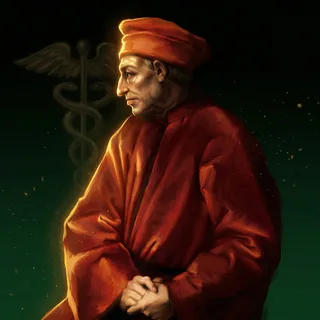
Marsilio Ficino
Last updated: September 4, 2026
Ficino is the indispensable bridge from ancient wisdom to modern esotericism, the intellectual architect who re-enchanted the Renaissance mind.
Lived
1433 – 1499
Nationality
Italian
Tradition
Hermeticism
Known For
Corpus Hermeticum (Latin translation, 1463), Theologia Platonica (1482), De Vita Libri Tres (1489)
Tone
Balanced3.5 / 6
Translated the Corpus Hermeticum, blending Neoplatonic light-mysticism with astrological magic. Pious and intellectual.
Why Ficino Matters
Marsilio Ficino matters because he single-handedly resurrected the core texts of Neoplatonism and Hermeticism for the Western world, translating them from Greek into Latin. His work was not merely academic; it was a profound synthesis, weaving these ancient philosophies with Christian theology in a way that profoundly influenced the intellectual and spiritual landscape of the Renaissance. Without Ficino, the Hermetic tradition, as we understand it today, would likely not exist in its current form, and the trajectory of Western esotericism would be unrecognizable.
Start Here: The Reading Path
- Corpus Hermeticum (Latin translation)1463While not Ficino's original writing, his translation of the 'Corpus Hermeticum' is arguably his most impactful contribution. It introduced the foundational texts of Hermetic philosophy, believed at the time to be the wisdom of an ancient Egyptian sage, Hermes Trismegistus, to the European intellectual elite.Read an English translation of the 'Corpus Hermeticum' first to grasp the core Hermetic principles before delving into Ficino's own commentaries.
- Theologia Platonica1482This monumental work is Ficino's magnum opus, a systematic attempt to reconcile Platonic philosophy with Christian theology. It explores the immortality of the soul, the hierarchy of being, and the ascent of the soul to God, laying the groundwork for much of his later thought.Approach this work with patience; it is dense but provides the deepest insight into Ficino's philosophical and theological synthesis.
- De Vita Libri Tres (Three Books on Life)1489This practical treatise explores the health and well-being of scholars, delving into astrological influences, the power of music, and the concept of 'spiritus mundi' for maintaining physical and mental vitality. It is a fascinating blend of medicine, astrology, and Neoplatonic magic.This is perhaps Ficino's most accessible original work, offering practical insights into Renaissance magical and medical thought.
Core Ideas in 60 Seconds
- The Soul is the Nexus of the Universe.Ficino posited that the human soul, being immortal and possessing a divine spark, occupies a central position in the hierarchy of being, mediating between the material and the divine realms.Soul
- All Things are Connected by Sympathy.Drawing from Hermetic and Neoplatonic sources, Ficino believed in a universal 'spiritus mundi' that connects all parts of the cosmos, allowing for sympathetic influences and the practice of natural magic.As Above So Below
- Ancient Wisdom (Prisca Theologia) Reveals Universal Truths.Ficino championed the idea of a 'prisca theologia,' or ancient theology, a perennial wisdom tradition passed down through figures like Hermes Trismegistus, Plato, and Zoroaster, which he saw as consonant with Christian revelation.Hermetic Principles
- Love is the Cosmic Force of Unification.He developed a sophisticated theory of Platonic love, seeing it as the divine force that draws all things towards beauty and goodness, facilitating the soul's ascent to the divine.Law of Love
Major Works
| Title | Year | What It Teaches | Best For |
|---|---|---|---|
| Corpus Hermeticum (Latin translation) | 1463 | It introduced the foundational texts of Hermetic philosophy, including the concept of 'As Above, So Below' and the divine nature of humanity, to the Latin-speaking West. | Anyone seeking the primary source material for Hermeticism's re-emergence in the Renaissance. |
| Theologia Platonica | 1482 | This work systematically synthesizes Platonic philosophy with Christian theology, particularly focusing on the immortality of the soul and its journey towards God. | Serious students of Neoplatonism, Christian mysticism, and the philosophical underpinnings of Renaissance esotericism. |
| De Vita Libri Tres | 1489 | It offers practical advice on maintaining health and vitality through astrological considerations, the use of talismans, and the power of music, all within a Neoplatonic framework. | Readers interested in Renaissance magic, astrology, and the practical applications of Ficino's philosophy. |
| Commentaries on Plato | 1484 | Ficino's extensive commentaries on Plato's dialogues, especially the 'Symposium' and 'Phaedrus,' elucidated Platonic concepts of love, beauty, and the soul's ascent for generations of scholars. | Those wanting a deeper understanding of Platonic philosophy through the lens of a Renaissance master. |
Lineage & Influence
Influenced By
Ficino was profoundly influenced by Plato and his Neoplatonic successors like Plotinus, whose works he translated and interpreted. The ancient Egyptian sage Hermes Trismegistus, through the 'Corpus Hermeticum,' provided the core Hermetic wisdom that Ficino integrated into his worldview.
Influenced
His work directly influenced a vast array of later esoteric thinkers, including Agrippa von Nettesheim, who drew heavily on Ficino's ideas of sympathetic magic and the 'spiritus mundi,' and Giordano Bruno, who expanded upon Ficino's Hermetic and Neoplatonic cosmology. Paracelsus also shows clear Ficinian echoes in his medical philosophy.
Parallel Thinkers
While not direct contemporaries, thinkers like John Dee, with his emphasis on angelic magic and a unified cosmos, and later figures like Emanuel Swedenborg, who also sought to reconcile spiritual and material realms, share thematic resonances with Ficino's grand synthesis.
The Story
Marsilio Ficino, born in 1433 in Florence, was destined for a medical career but found his true calling in philosophy and theology. Commissioned by Cosimo de' Medici, he embarked on the monumental task of translating the complete works of Plato and, crucially, the 'Corpus Hermeticum' from Greek into Latin. This act single-handedly reignited the flame of ancient wisdom in Western Europe, making these profound texts accessible after centuries of obscurity. As a Catholic priest and head of the Florentine Platonic Academy, Ficino dedicated his life to synthesizing Neoplatonism, Hermeticism, and Christianity, believing in a 'prisca theologia' that unified all truth. His philosophical system, which emphasized the immortality of the soul, the interconnectedness of the cosmos, and the power of divine love, laid the intellectual and spiritual groundwork for the Renaissance and profoundly shaped the development of Western esotericism for centuries to come, dying in 1499 having re-enchanted the world.
In Their Own Words
The soul is all things together.
Theologia Platonica
There is nothing in the world that is not a mirror of God.
Commentary on Plato's Symposium
He who loves God, loves all things, and he who loves all things, loves God.
Commentary on Plato's Symposium
Magic is the highest part of natural philosophy.
De Vita Libri Tres
Frequently Asked Questions
What is Ficino's most important contribution to Western esotericism?
Ficino's most important contribution is his translation of the 'Corpus Hermeticum' and the works of Plato into Latin. This act made these foundational texts accessible to Renaissance scholars, directly catalyzing the revival of Hermetic and Neoplatonic thought that underpins much of Western esotericism.
How did Ficino reconcile Christianity with Hermeticism and Platonism?
Ficino reconciled these traditions through his concept of 'prisca theologia,' or ancient theology. He believed that the truths found in Plato and Hermes Trismegistus were prefigurations or parallel revelations of Christian truth, all stemming from a single divine source.
What is 'spiritus mundi' in Ficino's philosophy?
The 'spiritus mundi' or 'world spirit' is a subtle, ethereal substance that Ficino believed permeated the entire cosmos. It acts as a medium through which celestial influences are transmitted to earthly beings and allows for sympathetic connections between all parts of the universe, forming the basis for his natural magic.
Explore Further
The Master Key Experience
The books teach the law.
The Experience trains it.
A 24-week guided journey through the laws of mind: weekly gates, lessons drawn from the texts in this library, and a living companion that remembers you.
Begin the ExperienceFree · Begin without an account