
Table of ContentsGiordano Bruno
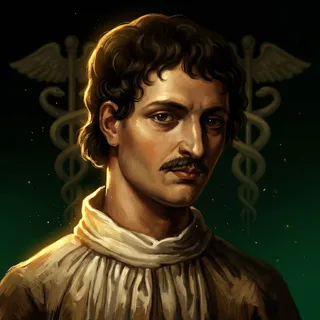
Giordano Bruno
Last updated: September 4, 2026
The Renaissance magus who dared to envision an infinite cosmos alive with divine intelligence, paying the ultimate price for his visionary audacity.
Lived
1548 – 1600
Nationality
Italian
Tradition
Hermeticism
Known For
De la Causa, Principio et Uno (1584), De Magia (c. 1590)
Tone
Shadow-Leaning4 / 6
Hermetic magic, memory arts, infinite cosmos. Martyred for forbidden intellectual territory.
Why Bruno Matters
Bruno stands as the pivotal bridge between medieval Hermeticism and modern occultism, transforming ancient Egyptian wisdom into a revolutionary cosmology that shattered the closed medieval universe. His synthesis of memory arts, natural magic, and infinite worlds philosophy created a template for Renaissance esotericism that would echo through centuries of Western magical thought. More than a martyr for science, he was a martyr for the hermetic vision of humanity's divine potential in an animate, intelligent cosmos.
Start Here: The Reading Path
- De la Causa, Principio et Uno1584Bruno's philosophical masterpiece presents the universe as an infinite expression of divine unity, where every part contains the whole. This is essential reading for understanding how Hermetic principles shaped Renaissance cosmology and the roots of panpsychist philosophy.Focus on dialogues 4 and 5 where Bruno develops his theory of the universe as a living, intelligent organism.
- De Magia1590Bruno's practical treatise on natural magic reveals how the trained magus can work with the sympathetic bonds connecting all things in the living cosmos. This text shows Bruno's debt to Agrippa while pushing magical theory toward a more naturalistic foundation.
Core Ideas in 60 Seconds
- The universe is infinite, eternal, and animated by a single divine substance expressing itself in endless formsBruno rejected the closed Aristotelian cosmos for an infinite universe where every world is a unique expression of the same divine principle.The ALL
- All things are bound together by sympathetic links that the trained mind can perceive and manipulateDrawing on Hermetic correspondence, Bruno taught that the magus works through natural bonds connecting all levels of reality.Correspondence Law of
- Memory is the foundation of magical power, allowing the mind to become a microcosm of the cosmic orderBruno's art of memory was both a practical technique and a spiritual discipline for aligning human consciousness with universal patterns.Microcosm
- Human beings are gods in exile who can reclaim their divine nature through knowledge and practiceBruno taught that humanity's fall from divine status could be reversed through hermetic wisdom and magical arts.Gnosis
Major Works
| Title | Year | What It Teaches | Best For |
|---|---|---|---|
| De la Causa, Principio et Uno | 1584 | The philosophical foundations of an infinite, living universe animated by divine intelligence | Advanced readers seeking the metaphysical roots of Renaissance esotericism |
| De Magia | 1590 | The practical methods of natural magic based on cosmic sympathies and correspondences | Practitioners interested in Renaissance magical theory and technique |
| Spaccio della Bestia Trionfante | 1584 | The moral and religious reform needed to restore humanity's divine status | Readers exploring Bruno's vision of spiritual transformation and social renewal |
Lineage & Influence
Influenced By
Bruno was profoundly shaped by the Hermetic corpus attributed to Hermes Trismegistus, which he saw as revealing the original Egyptian wisdom. He also drew heavily from Agrippa von Nettesheim's systematic magic and the Neoplatonic tradition that saw the cosmos as an emanation of divine unity.
Influenced
Though Bruno's direct influence was largely underground due to his execution, his vision of an infinite, animate cosmos would resurface in later esoteric traditions. His synthesis of Hermeticism with cosmological speculation provided a model for thinkers like Rudolf Steiner and influenced the broader development of Western occultism.
Parallel Thinkers
Bruno's contemporary Paracelsus shared his vision of a living, magical cosmos, though Paracelsus focused more on medical applications. Both men represented the Renaissance synthesis of Hermetic wisdom with direct experience of natural phenomena.
The Story
Born in Nola, Bruno entered the Dominican order but quickly ran afoul of authorities with his unorthodox views. His discovery of the Hermetic texts in the 1570s revolutionized his understanding of the cosmos, leading him to envision an infinite universe alive with divine intelligence. Fleeing Italy, he spent years wandering European courts, teaching his revolutionary synthesis of memory arts, natural magic, and cosmological speculation. His vision of humanity as gods in exile, capable of reclaiming divine status through hermetic wisdom, combined explosive metaphysical insights with practical magical techniques. Returning to Italy in 1591, he was arrested by the Inquisition and spent eight years in prison, refusing to recant his core beliefs. His execution in 1600 made him a martyr not just for scientific freedom, but for the hermetic vision of human divine potential in an animate cosmos.
In Their Own Words
The universe is entirely infinite because it has neither edge, limit, nor surfaces.
De l'Infinito Universo et Mondi
There is one simple divinity found in all things, one fecund nature, preserving mother of the universe.
De la Causa, Principio et Uno
Frequently Asked Questions
Why was Giordano Bruno burned at the stake?
Bruno was executed by the Roman Inquisition in 1600 for refusing to recant his heretical beliefs, including the infinity of the universe, the existence of other worlds, and his hermetic view that humans could achieve divine status. His cosmological views threatened both scientific and religious orthodoxy.
What is Giordano Bruno's art of memory?
Bruno's memory system combined classical mnemonic techniques with hermetic philosophy, teaching that by organizing memory according to cosmic patterns, the practitioner could align their mind with universal principles. This made memory training both a practical skill and a form of magical practice.
How did Giordano Bruno influence modern occultism?
Bruno's synthesis of Hermeticism with infinite cosmos theory provided a template for later esoteric thinkers who sought to reconcile ancient wisdom with modern cosmology. His vision of humanity's divine potential through magical practice influenced the development of Western occult traditions.
Explore Further
The Master Key Experience
The books teach the law.
The Experience trains it.
A 24-week guided journey through the laws of mind: weekly gates, lessons drawn from the texts in this library, and a living companion that remembers you.
Begin the ExperienceFree · Begin without an account