
Table of ContentsErnest Holmes
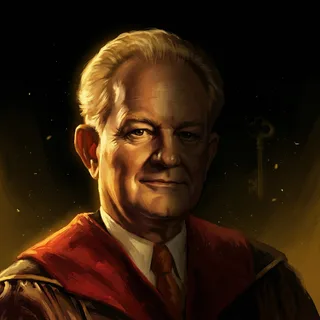
Ernest Holmes
Last updated: September 4, 2026
The man who built New Thought's most complete system, transforming scattered metaphysical insights into a teachable science of consciousness.
Lived
1887 – 1960
Nationality
American
Tradition
Religious Science
Known For
The Science of Mind (1926), Creative Mind and Success (1919), This Thing Called You (1948)
Tone
Light-Leaning2 / 6
Optimistic Science of Mind; systematic but fundamentally uplifting.
Why Holmes Matters
Holmes accomplished what no other New Thought leader managed: creating a unified system that was simultaneously practical, philosophical, and teachable at scale. While others wrote inspirational books, Holmes built an entire methodology around Spiritual Mind Treatment that could be learned, practiced, and replicated. His Science of Mind became the closest thing New Thought has to a comprehensive textbook, synthesizing decades of metaphysical thought into principles that ordinary people could apply systematically.
Start Here: The Reading Path
- The Science of Mind1926Holmes' masterwork presents his complete system in textbook format, moving from basic principles through advanced practice. Focus on Part II where he lays out the mechanics of Spiritual Mind Treatment, the core practice that distinguishes his approach.Read it as a manual, not philosophy. Holmes intended this as practical instruction.
- Creative Mind and Success1919His earliest systematic presentation shows Holmes developing the core ideas that would later become Religious Science. More accessible than the later textbook and reveals his debt to Troward's mental science approach.Notice how he's already working out the treatment methodology that would define his system.
Core Ideas in 60 Seconds
- Spiritual Mind Treatment is a scientific method for applying mental law to specific conditionsHolmes created a systematic five-step process for using consciousness to create change, treating metaphysical principles as discoverable laws rather than mystical beliefs.Spiritual Mind Treatment
- There is a thing called Science of Mind, which is the study of Life and the nature of the laws of thoughtHolmes positioned his work as genuine science, claiming that mental and spiritual phenomena operate according to discoverable principles that can be studied and applied systematically.Religious Science
- Life is a mirror and will reflect back to the thinker what he thinks into itConsciousness creates experience through a responsive universe that mirrors our mental states and beliefs back to us as external conditions.Law of Attraction
- We are surrounded by a creative medium which receives the impress of our thought and acts upon itHolmes taught that Universal Mind functions as an impersonal law that responds to our conscious direction without judgment or resistance.Universal Mind
Major Works
| Title | Year | What It Teaches | Best For |
|---|---|---|---|
| The Science of Mind | 1926 | A complete system of mental science including philosophy, methodology, and practical application through Spiritual Mind Treatment | Anyone seeking Holmes' complete system and wanting to understand Religious Science comprehensively |
| Creative Mind and Success | 1919 | Early formulation of mental science principles applied to practical achievement and personal development | Beginners who want Holmes' core ideas in more accessible form |
| This Thing Called You | 1948 | Mature exposition of spiritual psychology and the nature of individual consciousness within Universal Mind | Readers interested in Holmes' understanding of human nature and spiritual identity |
Lineage & Influence
Influenced By
Holmes built directly on Thomas Troward's mental science, calling him 'the greatest teacher of mental science.' He also drew heavily from Ralph Waldo Emerson's transcendentalism and Emma Curtis Hopkins' systematic approach to New Thought instruction.
Influenced
Holmes founded the Religious Science movement and Centers for Spiritual Living, training hundreds of practitioners and ministers. His systematic approach influenced later New Thought teachers like Joseph Murphy and Catherine Ponder who adopted his treatment methodology.
Parallel Thinkers
Charles and Myrtle Fillmore developed Unity around the same time, but focused more on practical Christianity while Holmes emphasized scientific methodology. Joel S. Goldsmith later developed similar ideas about consciousness as law but took a more mystical approach.
The Story
Holmes grew up poor in rural Maine, discovering New Thought through Ralph Waldo Trine's writings as a young man. This encounter launched him on a decades-long quest to systematize metaphysical principles into teachable form. Moving to Los Angeles in 1912, he began lecturing and gradually developed what he called Religious Science, drawing especially from Thomas Troward's mental science lectures. Holmes was not content with inspirational philosophy; he wanted to create something as systematic as physical science but applied to mental and spiritual phenomena. By 1926, he had produced The Science of Mind, a comprehensive textbook that treated consciousness as an exact science with discoverable laws. Unlike other New Thought leaders who emphasized personal inspiration, Holmes built institutions, trained practitioners, and created reproducible methods. He spent his later years refining and teaching his system, establishing it as one of the most systematic approaches to applied metaphysics in the Western tradition.
In Their Own Words
Life is a mirror and will reflect back to the thinker what he thinks into it.
The Science of Mind
There is a thing called Science of Mind, which is the study of Life and the nature of the laws of thought; the conception that we live in a spiritual Universe; that God is in, through, around and for us.
The Science of Mind
We are surrounded by a creative medium which receives the impress of our thought and acts upon it.
The Science of Mind
Frequently Asked Questions
What is Religious Science and how is it different from other New Thought teachings?
Religious Science is Holmes' systematic approach to New Thought that emphasizes scientific methodology over inspirational philosophy. Unlike other movements, it provides specific techniques like Spiritual Mind Treatment and treats metaphysical principles as discoverable laws rather than beliefs.
What is Spiritual Mind Treatment and how do you practice it?
Spiritual Mind Treatment is Holmes' five-step method for applying consciousness to create change: Recognition of God, Unification with Divine Mind, Declaration of truth about the situation, Gratitude, and Release. It's practiced as a systematic mental process rather than prayer or affirmation.
Is Ernest Holmes' Science of Mind related to Scientology?
No, despite similar names, they are completely unrelated. Holmes developed Religious Science in the 1920s as part of the New Thought tradition, decades before L. Ron Hubbard created Scientology. Science of Mind is a metaphysical philosophy, while Scientology is a different organization entirely.
Explore Further
The Master Key Experience
The books teach the law.
The Experience trains it.
A 24-week guided journey through the laws of mind: weekly gates, lessons drawn from the texts in this library, and a living companion that remembers you.
Begin the ExperienceFree · Begin without an account