
Table of ContentsJoseph Murphy
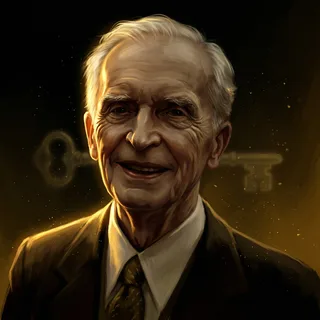
Joseph Murphy
Last updated: September 4, 2026
The preacher who turned the subconscious mind into New Thought's most practical tool for manifestation.
Lived
1898 – 1981
Nationality
Irish-American
Tradition
Religious Science
Known For
The Power of Your Subconscious Mind (1963), The Miracle of Mind Dynamics (1964), Believe in Yourself (1955)
Tone
Light-Leaning2 / 6
Subconscious mind framed through prosperity, prayer, and faith.
Why Murphy Matters
Murphy transformed abstract metaphysical principles into concrete mental techniques that anyone could use. Where other New Thought teachers spoke in spiritual generalities, Murphy offered specific methods for programming the subconscious mind through prayer and visualization. His work bridged the gap between high metaphysics and practical psychology, making him the most widely read New Thought author worldwide. He proved that spiritual law could be systematized and taught as reliably as any science.
Start Here: The Reading Path
- The Power of Your Subconscious Mind1963Murphy's masterpiece that systematically explains how the subconscious operates as the creative medium of spiritual law. Focus on his distinction between conscious and subconscious functions, and his specific techniques for impressing the subconscious with desired outcomes.Read the case studies carefully - they show Murphy's method in action across different life situations.
- Believe in Yourself1955His earlier work that establishes the philosophical foundation for subconscious programming. More focused on building unshakeable faith in one's ability to access divine power through proper mental direction.
Core Ideas in 60 Seconds
- The subconscious mind is the connecting link between finite human experience and infinite divine powerMurphy taught that the subconscious serves as the creative medium that translates conscious intentions into physical manifestation.Subjective Mind
- Whatever you impress upon your subconscious mind is expressed in your outer worldThe subconscious accepts whatever the conscious mind repeatedly impresses upon it and works to manifest that pattern in experience.Law of Attraction
- The subconscious responds to suggestion, not argumentRational analysis cannot change subconscious patterns; only repeated emotional impression through prayer, affirmation, and visualization can reprogram it.Affirmation
- Sleep time is the most powerful period for subconscious programmingMurphy emphasized that the moments before sleep offer direct access to the subconscious when conscious resistance is lowest.Meditation
Major Works
| Title | Year | What It Teaches | Best For |
|---|---|---|---|
| The Power of Your Subconscious Mind | 1963 | How to systematically program the subconscious mind for health, prosperity, and success through specific mental techniques. | Anyone seeking practical methods for applying spiritual principles |
| The Miracle of Mind Dynamics | 1964 | Advanced techniques for using mental and emotional energy to create desired changes in life circumstances. | Practitioners ready to deepen their understanding of mental causation |
| Believe in Yourself | 1955 | How to build unshakeable faith in your ability to access and direct divine power through proper thinking. | Beginners who need to establish confidence in metaphysical principles |
Lineage & Influence
Influenced By
Murphy studied under the mysterious teacher Abdullah, who also taught Neville Goddard, learning practical Kabbalah and Biblical interpretation. He was deeply influenced by Ernest Holmes's systematic approach to mental science and Emmet Fox's emphasis on constructive thinking and prayer.
Influenced
Murphy's systematic approach to subconscious programming influenced virtually every subsequent self-help and manifestation teacher. His techniques became standard practice in Religious Science and Divine Science churches worldwide.
Parallel Thinkers
While Neville Goddard emphasized imagination and Biblical mysticism, Murphy focused on practical psychology and systematic technique. Like Norman Vincent Peale, he made metaphysical principles accessible to mainstream audiences, but with more rigorous attention to mental mechanics.
The Story
Joseph Murphy arrived in America from Ireland with a calling to bridge ancient spiritual wisdom with modern psychology. Ordained in both Divine Science and Religious Science, he spent decades as a practicing minister while studying the mechanics of mental causation under teachers like Abdullah. Murphy discovered that the subconscious mind operated according to precise laws that could be understood and applied systematically. Rather than treating spiritual healing as mysterious, he demonstrated that mental and emotional patterns could be scientifically programmed to produce predictable results. His lectures and writings spread worldwide, making him the most practical voice in New Thought and proving that metaphysical principles could work as reliably as any natural law.
In Their Own Words
The power of your subconscious mind is beyond all measure.
The Power of Your Subconscious Mind
Your subconscious mind does not argue with you. It accepts what your conscious mind decrees.
The Power of Your Subconscious Mind
The law of your mind is the law of belief. This means to believe in the way your mind works, to believe in belief itself.
The Power of Your Subconscious Mind
Frequently Asked Questions
What is the difference between Joseph Murphy and Neville Goddard?
Both studied under Abdullah, but Murphy focused on systematic subconscious programming techniques while Neville emphasized imaginative mysticism and Biblical interpretation. Murphy's approach is more methodical and psychological, Neville's more intuitive and mystical.
How does Joseph Murphy's subconscious mind technique actually work?
Murphy taught that you program the subconscious through repetitive conscious direction using prayer, affirmation, and visualization, especially before sleep. The subconscious then works automatically to manifest whatever patterns have been consistently impressed upon it.
Is Joseph Murphy's approach religious or psychological?
Murphy combined both approaches, treating spiritual principles as psychological laws that operate regardless of religious belief. He grounded his techniques in Divine Science theology while explaining them through practical psychology.
Explore Further
The Master Key Experience
The books teach the law.
The Experience trains it.
A 24-week guided journey through the laws of mind: weekly gates, lessons drawn from the texts in this library, and a living companion that remembers you.
Begin the ExperienceFree · Begin without an account