
Table of ContentsManly P. Hall
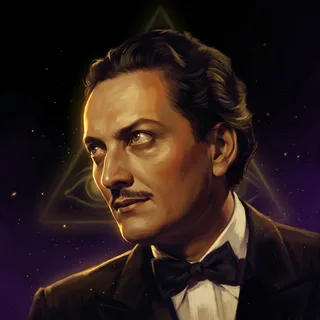
Manly P. Hall
Last updated: September 4, 2026
The young prodigy who wrote Western esotericism's most ambitious encyclopedia before age 30, compiling humanity's hidden wisdom into one massive, controversial reference work.
Lived
1901 – 1990
Nationality
Canadian-American
Tradition
Western Esotericism
Known For
The Secret Teachings of All Ages (1928), The Secret Destiny of America (1944), Self-Unfoldment by Disciplines of Realization (1942)
Tone
Shadow-Leaning4 / 6
Encyclopedic survey including black magic, demonic pacts, and cautionary tales. Scholarly and didactic, not glorifying.
Why Hall Matters
Hall represents the synthetic impulse in esoteric studies: the belief that all mystical traditions share common roots and that this ancient wisdom can be systematically organized and preserved. His encyclopedic approach influenced generations of occult students and alternative spiritual seekers. While scholars debate his sources and methods, his impact on popular esotericism is undeniable. He democratized access to obscure mystical teachings at a time when such knowledge was largely confined to secret societies and academic circles.
Start Here: The Reading Path
- The Secret Teachings of All Ages1928Hall's magnum opus attempts to synthesize all mystical traditions into one comprehensive volume. Focus on the sections on Hermetic philosophy and symbolic interpretation rather than trying to read cover to cover.Use this as a reference work, not a linear read. Start with topics you already know to gauge Hall's approach.
- Self-Unfoldment by Disciplines of Realization1942A more accessible introduction to Hall's practical philosophy, focusing on personal development through ancient wisdom. This shows his teaching style and core beliefs about human potential.
Core Ideas in 60 Seconds
- Ancient wisdom traditions contain universal truths that modern humanity has forgottenHall believed that mystery schools, alchemists, and mystics preserved essential knowledge about consciousness and reality that mainstream religion and science had abandoned.Gnosis
- Symbols and myths encode practical spiritual teachingsRather than mere superstition, Hall argued that ancient symbols and stories contain specific instructions for inner development and understanding cosmic principles.Correspondence Law of
- True education should develop both intellectual and spiritual facultiesHall advocated for a holistic approach to learning that cultivates intuition, wisdom, and character alongside factual knowledge.Self-Realization
- America has a secret spiritual destiny tied to ancient mysteriesHall claimed that America's founders were influenced by esoteric traditions and that the nation has a hidden role in humanity's spiritual evolution.Illumination
Major Works
| Title | Year | What It Teaches | Best For |
|---|---|---|---|
| The Secret Teachings of All Ages | 1928 | A comprehensive survey of mystical traditions, symbols, and philosophical systems from around the world | Serious students seeking a reference work on comparative esotericism |
| The Secret Destiny of America | 1944 | Hall's theory that America was founded by initiates to fulfill a spiritual mission in world history | Readers interested in esoteric interpretations of American history |
| Self-Unfoldment by Disciplines of Realization | 1942 | Practical methods for personal development based on ancient wisdom traditions | Beginners seeking Hall's approach to spiritual development |
Lineage & Influence
Influenced By
Hall drew heavily from Helena Petrovna Blavatsky's synthetic approach to world religions and Eliphas Levi's revival of ceremonial magic. He also incorporated the Hermetic tradition through sources like Agrippa von Nettesheim and the writings attributed to Hermes Trismegistus.
Influenced
Hall's encyclopedic method influenced countless New Age authors and alternative spirituality teachers. His Philosophical Research Society became a model for independent esoteric research institutions.
Parallel Thinkers
Rudolf Steiner was pursuing similar synthetic approaches to ancient wisdom during Hall's early career, though Steiner focused more on original spiritual research. Alice A. Bailey was also channeling comprehensive esoteric teachings, but through claimed telepathic contact rather than historical research.
The Story
Manly Hall was a precocious Canadian who discovered his calling as a lecturer while still a teenager in Los Angeles. Driven by an insatiable appetite for ancient wisdom and mystical knowledge, he spent his early twenties researching and writing what would become The Secret Teachings of All Ages, drawing from rare books, manuscripts, and esoteric sources. The massive work, completed before his 28th birthday, established him as a controversial but influential figure in American occultism. Hall spent the rest of his long life lecturing, writing prolifically, and building the Philosophical Research Society into one of America's most significant independent libraries of esoteric literature. Though critics questioned his scholarship and sources, Hall succeeded in his primary mission: making the hidden wisdom of ages accessible to modern seekers and preserving esoteric knowledge for future generations.
In Their Own Words
If the infinite had not desired man to be wise, he would not have bestowed upon him the faculty of knowing.
The Secret Teachings of All Ages
The greatest teacher is he who makes himself progressively unnecessary to his students.
Self-Unfoldment by Disciplines of Realization
Frequently Asked Questions
Is Manly P. Hall's scholarship reliable?
Hall's scholarship is controversial. While he compiled vast amounts of information about esoteric traditions, academic scholars have questioned his sources, methodology, and some of his claims. His work is best approached as a starting point for further research rather than definitive authority.
What is The Secret Teachings of All Ages actually about?
It's an encyclopedic attempt to document and synthesize mystical traditions from around the world, covering topics like ancient mysteries, alchemy, astrology, symbolism, and comparative religion. Hall aimed to preserve esoteric knowledge he believed was being lost in the modern world.
How did Manly P. Hall write such a comprehensive work so young?
Hall was extraordinarily precocious and had access to rare esoteric libraries in Los Angeles. He was also a gifted synthesizer who could quickly absorb and organize vast amounts of material, though this speed may have contributed to some of the scholarly concerns about his work.
Explore Further
The Master Key Experience
The books teach the law.
The Experience trains it.
A 24-week guided journey through the laws of mind: weekly gates, lessons drawn from the texts in this library, and a living companion that remembers you.
Begin the ExperienceFree · Begin without an account