
Table of ContentsRudolf Steiner
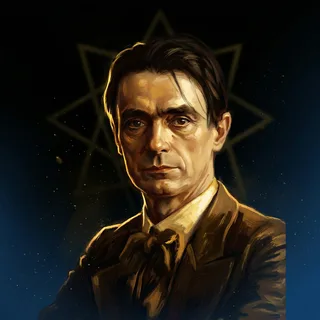
Rudolf Steiner
Last updated: September 4, 2026
The architect of spiritual science who transformed mysticism from ancient dogma into modern method, creating practical systems for developing supersensible perception.
Lived
1861 – 1925
Nationality
Austrian
Tradition
Theosophy
Known For
Knowledge of the Higher Worlds and Its Attainment (1904), An Outline of Occult Science (1910), Theosophy (1904)
Tone
Balanced3.5 / 6
Christian-ethical core but vivid Ahrimanic/Luciferic beings. Karma and spiritual warfare within a redemptive arc.
Why Steiner Matters
Steiner stands alone among esoteric thinkers for his systematic approach to spiritual investigation, treating higher worlds as territories to be mapped with the same rigor as physical science. Where other occultists relied on tradition or revelation, Steiner developed precise exercises for awakening clairvoyant consciousness. His Anthroposophy spawned entire movements in education, agriculture, medicine, and the arts, proving that esoteric wisdom could reshape modern life. He remains the most influential bridge between ancient wisdom and contemporary application.
Start Here: The Reading Path
- Knowledge of the Higher Worlds and Its Attainment1904The essential training manual for developing supersensible perception through specific exercises and moral development. Focus on the practical exercises rather than the philosophical background.Read with a practice journal and attempt the concentration exercises as you go.
- Theosophy1904Steiner's systematic presentation of the human being's spiritual constitution and evolution through multiple incarnations. This establishes the foundational concepts needed for everything else.
- An Outline of Occult Science1910His comprehensive cosmology describing the evolution of consciousness through planetary conditions. Challenging but essential for understanding Steiner's complete worldview.
Core Ideas in 60 Seconds
- Thinking itself can become a spiritual activity when purified of sensory contentSteiner taught that pure thinking, free from mental images or emotions, opens direct access to spiritual reality.Consciousness
- The human being consists of physical body, etheric body, astral body, and egoThis fourfold constitution forms the basis for understanding human development and spiritual evolution.Astral Body
- Supersensible investigation requires the same objectivity as physical scienceSteiner insisted that spiritual research must follow rigorous methods to achieve reliable knowledge of higher worlds.Clairvoyance
- Individual freedom emerges through conscious participation in spiritual evolutionUnlike deterministic systems, Anthroposophy emphasizes each person's capacity to consciously direct their development.Self-Realization
Major Works
| Title | Year | What It Teaches | Best For |
|---|---|---|---|
| Knowledge of the Higher Worlds and Its Attainment | 1904 | Systematic exercises for developing supersensible perception and spiritual organs. | Anyone serious about spiritual development through disciplined practice |
| Theosophy | 1904 | The spiritual constitution of the human being and laws governing reincarnation. | Students seeking a systematic understanding of spiritual anthropology |
| An Outline of Occult Science | 1910 | Cosmic evolution through successive planetary embodiments of consciousness. | Advanced students ready to engage with complex cosmological concepts |
| The Philosophy of Freedom | 1894 | The epistemological foundation for spiritual science through pure thinking. | Philosophically minded readers who need the logical groundwork |
Lineage & Influence
Influenced By
Steiner absorbed Blavatsky's Theosophical framework of spiritual evolution and higher planes but rejected her reliance on Eastern Masters and hidden adepts. He drew heavily from Goethe's scientific method and German Idealism, particularly Fichte's concept of the active ego.
Influenced
Alice Bailey adapted Steiner's systematic approach to spiritual investigation in her own clairvoyant research. The entire Waldorf education movement, biodynamic agriculture, and anthroposophical medicine trace directly to his innovations. Dion Fortune's practical approach to occult training shows clear Steinerian influence.
Parallel Thinkers
While Annie Besant remained within orthodox Theosophy, Steiner pursued independent spiritual investigation using Western philosophical methods. Unlike Aleister Crowley's individualistic magick, Steiner emphasized community building and practical applications of spiritual knowledge.
The Story
Rudolf Steiner began as a Goethe scholar editing the poet's scientific works, where he discovered that thinking itself could become an organ of spiritual perception. This insight led him into Helena Blavatsky's Theosophical Society, where he served as leader of the German section until 1913. But Steiner's Western, Christ-centered approach increasingly clashed with Theosophy's Eastern orientation, especially when Besant proclaimed the young Krishnamurti as the new World Teacher. Steiner broke away to found Anthroposophy, developing systematic methods for spiritual investigation that he claimed were as rigorous as physical science. He spent his final years applying these insights to create Waldorf schools, biodynamic agriculture, new forms of medicine and architecture, and revolutionary approaches to the arts. More than any other modern occultist, Steiner proved that esoteric wisdom could transform practical life, leaving behind institutions that continue to flourish worldwide.
In Their Own Words
The healthy social life is found when in the mirror of each human soul the whole community finds its reflection, and when in the community the virtue of each one is living.
Knowledge of the Higher Worlds and Its Attainment
Thinking is the spiritual activity which the human being exercises in full consciousness while still incarnated in a physical body.
The Philosophy of Freedom
The point is not to learn what to think, but how to think.
Lectures on Education
Frequently Asked Questions
What is the difference between Theosophy and Anthroposophy?
Steiner's Anthroposophy emphasizes Western, Christ-centered spiritual development through individual investigation, while Theosophy relies more heavily on Eastern teachings and claimed communications from spiritual masters. Anthroposophy focuses on practical applications in education, agriculture, and medicine.
How do you develop clairvoyance according to Rudolf Steiner?
Steiner taught specific concentration and meditation exercises combined with moral development to awaken supersensible perception. The process involves purifying thinking, developing inner calm, and gradually strengthening spiritual organs of perception through disciplined practice.
What are Waldorf schools based on?
Waldorf education applies Steiner's understanding of child development through seven-year cycles, emphasizing imagination in early years, feeling in middle school, and thinking in high school. The curriculum integrates arts, practical skills, and academics based on the child's spiritual development.
Is Rudolf Steiner's spiritual science actually scientific?
Steiner claimed to apply rigorous observational methods to spiritual phenomena, but his approach differs from conventional science by relying on trained supersensible perception rather than physical instruments. Critics question whether such subjective methods can yield objective knowledge.
Explore Further
The Master Key Experience
The books teach the law.
The Experience trains it.
A 24-week guided journey through the laws of mind: weekly gates, lessons drawn from the texts in this library, and a living companion that remembers you.
Begin the ExperienceFree · Begin without an account