
Table of ContentsWilliam Walker Atkinson
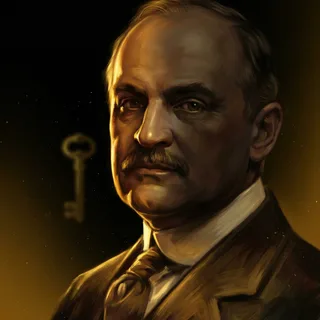
William Walker Atkinson
Last updated: September 4, 2026
The master synthesizer who gave both New Thought and modern Hermeticism their most enduring frameworks through prolific pseudonymous writings.
Lived
1862 – 1932
Nationality
American
Tradition
New Thought
Known For
Thought Vibration (1906), The Kybalion (1908, as 'Three Initiates'), The Secret of Mental Magic (1907)
Tone
Balanced3 / 6
Positive prosperity works sit at 2, but "Mental Influence" and "Mental Fascination" texts discuss psychic domination at 4+. Single number is misleading; range is more honest.
Why Atkinson Matters
Atkinson accomplished what no other occult author has managed: he created practical systems that work across traditions while remaining genuinely accessible. His fingerprints are everywhere in modern esotericism, from the ubiquitous 'law of attraction' to the Seven Hermetic Principles that every student encounters. Writing under dozens of pen names, he built bridges between Eastern yoga, Western Hermeticism, and American mental science that still carry traffic today. His genius lay not in originality but in synthesis, taking abstract principles and making them actionable for ordinary seekers.
Start Here: The Reading Path
- Thought Vibration1906Start here to understand Atkinson's core philosophy before he went underground into pseudonyms. This book establishes his fundamental premise that thought operates through vibrational frequencies and can be scientifically directed.Focus on the practical exercises rather than the theoretical explanations, which can feel dated.
- The Kybalion1908The most influential hermetic text of the modern era, presenting the Seven Principles in clear, memorable form. Essential reading even if you suspect Atkinson wrote it rather than ancient initiates.
- The Secret of Mental Magic1907His most sophisticated treatment of mental influence and personal magnetism, bridging hypnosis, suggestion, and occult practice with unusual psychological insight.
Core Ideas in 60 Seconds
- All is mind; the universe is mentalReality itself is fundamentally mental in nature, making thought the primary creative force rather than a mere epiphenomenon of matter.Principle of Mentalism
- Like attracts like through vibrational correspondenceThoughts operate as vibrations that naturally align with corresponding frequencies in the external world, forming the basis of manifestation.Law of Attraction
- Personal magnetism can be systematically developed through mental disciplineThe ability to influence others and circumstances stems from cultivated mental states that can be learned and strengthened through practice.Personal Magnetism
- The hermetic principles operate as universal laws governing all phenomenaSeven fundamental principles underlie all manifestation, from mental processes to physical events, providing a master key to understanding reality.Hermetic Principles
Major Works
| Title | Year | What It Teaches | Best For |
|---|---|---|---|
| Thought Vibration | 1906 | How to harness the vibrational nature of thought for practical results in health, wealth, and relationships. | Beginners seeking a systematic introduction to mental science |
| The Kybalion | 1908 | The Seven Hermetic Principles as a complete philosophical system for understanding universal laws. | Anyone serious about Western esotericism |
| The Secret of Mental Magic | 1907 | Advanced techniques for mental influence, suggestion, and the development of personal magnetism. | Practitioners interested in influence and persuasion |
| Mind Power | 1912 | The scientific basis of mental forces and their practical application in daily life. | Readers wanting psychological rather than mystical approaches |
Lineage & Influence
Influenced By
Atkinson synthesized Phineas Parkhurst Quimby's mental healing principles with Thomas Troward's metaphysical logic, while drawing heavily on Helena Petrovna Blavatsky's Eastern concepts and the practical psychology of his era.
Influenced
His frameworks shaped virtually every subsequent New Thought author from Charles F. Haanel to Napoleon Hill, while The Kybalion became required reading for generations of Western occultists including Dion Fortune and modern chaos magicians.
Parallel Thinkers
He worked alongside Emma Curtis Hopkins and Wallace D. Wattles in developing systematic approaches to mental science, though Atkinson proved more prolific and pseudonymous than his contemporaries.
The Story
William Walker Atkinson began as a successful Chicago lawyer until a nervous breakdown in his thirties forced him to discover the mental healing principles that would consume the rest of his life. Converting from conventional success to metaphysical investigation, he became the most prolific author in New Thought history, writing under his own name and dozens of pseudonyms including Yogi Ramacharaka, Theron Q. Dumont, and most famously, as one of the 'Three Initiates' behind The Kybalion. His genius lay in synthesis rather than innovation, taking the scattered insights of mental science, Eastern philosophy, and Western occultism and forging them into practical systems that ordinary people could use. Working from his Chicago base, he built a publishing empire that reached millions of readers across multiple traditions, creating the intellectual infrastructure that still supports modern self-help and occult practice.
In Their Own Words
Mind is the great factory of thought. To it are brought the raw materials of thought, and in it are turned out the finished products in the shape of thought-creations.
Thought Vibration
The ALL is MIND; The Universe is Mental.
The Kybalion
Every thought sent forth is a vibrating mental energy that goes forth even unto the ends of the universe, and becomes a permanent addition to the sum total of the world's mental phenomena.
Thought Vibration
Frequently Asked Questions
Did William Walker Atkinson really write The Kybalion?
While published under 'Three Initiates,' scholarly consensus and stylistic analysis strongly suggest Atkinson was the primary or sole author. The philosophical content and writing style match his other works perfectly, and he had both the knowledge and commercial motivation to create this synthesis.
How many books did William Walker Atkinson write?
Over 100 titles under various pseudonyms, making him one of the most prolific authors in occult and self-help literature. His most famous pen names include Yogi Ramacharaka, Theron Q. Dumont, and Swami Panchadasi.
What is William Walker Atkinson's main teaching?
That mind is the fundamental reality and thoughts operate as vibrational forces that can be scientifically directed to influence both consciousness and circumstances. He systematized these principles into practical methods anyone could learn.
Is William Walker Atkinson's work still relevant today?
Absolutely. His frameworks underpin most modern manifestation teachings, and The Kybalion remains a foundational text in contemporary occultism. His synthesis of Eastern and Western approaches anticipated many current developments in consciousness studies.
Explore Further
The Master Key Experience
The books teach the law.
The Experience trains it.
A 24-week guided journey through the laws of mind: weekly gates, lessons drawn from the texts in this library, and a living companion that remembers you.
Begin the ExperienceFree · Begin without an account