
Table of ContentsAnnie Besant
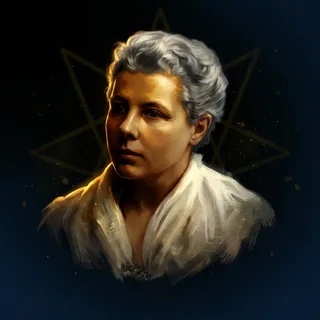
Annie Besant
Last updated: September 4, 2026
The extraordinary woman who transformed Theosophy from occult curiosity into a global movement for human liberation.
Lived
1847 – 1933
Nationality
British
Tradition
Theosophy
Known For
The Ancient Wisdom (1897), Esoteric Christianity (1901), Thought-Forms (1901, with C.W. Leadbeater)
Tone
Balanced3 / 6
Ethical and service-oriented but discusses karma, hierarchies, and cosmic cycles seriously.
Why Besant Matters
Besant stands as perhaps the most effective translator of esoteric wisdom into practical social action in modern history. She took Blavatsky's dense metaphysical teachings and made them sing with clarity and purpose, showing how ancient wisdom could address contemporary problems from Indian independence to women's rights. Her presidency of the Theosophical Society for 26 years proved that occult philosophy could be a force for progressive reform, not just private mystical experience. What makes her indispensable is her demonstration that spiritual evolution and social evolution are the same process.
Start Here: The Reading Path
- The Ancient Wisdom1897Begin here for Besant's clearest exposition of Theosophical doctrine without Blavatsky's forbidding complexity. She systematically explains the seven principles of human nature, the processes of evolution and reincarnation, and humanity's spiritual destiny. This book reveals why Theosophy captured the imagination of reformers worldwide.Focus on her treatment of consciousness as the key to evolution in chapters 3-5
- Esoteric Christianity1901Essential reading for understanding how Besant bridged Western religious tradition with Eastern wisdom. She reveals the hidden teachings within Christianity, arguing that Jesus embodied universal spiritual principles found in all great religions. This work shows her skill at making esoteric ideas relevant to Western audiences.
Core Ideas in 60 Seconds
- Evolution is not merely physical but fundamentally spiritual, with consciousness as its driving forceHuman beings are evolving toward divine consciousness through successive lives, each offering opportunities for soul development.Consciousness
- All religions contain the same esoteric truths beneath their exoteric formsThe great spiritual teachers throughout history have taught identical principles adapted to their times and cultures.Theosophy
- Social reform and spiritual development are inseparably linked aspects of human evolutionIndividual enlightenment without working for collective progress is spiritually incomplete.Karma
- Occult knowledge carries the responsibility of service to humanityThose who gain access to hidden wisdom must use it to uplift civilization, not for personal advancement alone.Occult
Major Works
| Title | Year | What It Teaches | Best For |
|---|---|---|---|
| The Ancient Wisdom | 1897 | A systematic presentation of Theosophical cosmology and human spiritual evolution | Beginners seeking a clear introduction to Theosophical doctrine |
| Esoteric Christianity | 1901 | How Christian symbolism conceals universal spiritual truths found in all religions | Readers interested in comparative religion and hidden meanings in Christianity |
| Thought-Forms | 1901 | How thoughts create visible forms in higher dimensions that influence physical reality | Advanced students interested in the mechanics of thought and visualization |
Lineage & Influence
Influenced By
Besant was profoundly shaped by Helena Blavatsky, whose student and eventual successor she became after a dramatic conversion from atheism to Theosophical belief. Her approach was also influenced by her earlier work in social reform and her deep study of Hindu philosophy during her years in India.
Influenced
Her clear systematization of Theosophical doctrine influenced Alice Bailey's later teachings on the seven rays and spiritual hierarchy. Rudolf Steiner, though he broke with the Society, developed his Anthroposophy partly in dialogue with Besant's interpretations of esoteric Christianity.
Parallel Thinkers
She worked alongside C.W. Leadbeater on investigations into thought-forms and the hidden side of things, though their collaboration was sometimes controversial. Like Rudolf Steiner, she sought to make occult knowledge scientifically respectable while maintaining its transformative power.
The Story
Annie Besant's life reads like a Victorian novel of spiritual transformation. Born into middle-class respectability, she first shocked society by leaving her clergyman husband and becoming a firebrand atheist, lecturing alongside Charles Bradlaugh for secularism and birth control. Then came her second conversion: reading Blavatsky's 'Secret Doctrine' in 1889 for a review assignment, she experienced what she called a spiritual homecoming and threw herself into Theosophy with characteristic intensity. Moving to India, she became not only Blavatsky's successor as president of the Theosophical Society but also a leader in the Indian independence movement, founding schools and championing self-rule. Her genius lay in translating Blavatsky's dense metaphysics into practical wisdom that could inspire social reformers, educators, and seekers worldwide, proving that ancient wisdom and modern progress could march together.
In Their Own Words
The essence of religion is the growth of the soul, and this growth is fostered by the practice of virtue, the search for truth, and the service of humanity.
The Ancient Wisdom
Man is a spiritual intelligence, using matter for purposes of experience and expression, and the spiritual intelligence is the real man, while matter is his temporary vesture.
The Ancient Wisdom
Thought is a real thing, a definite power, and the thought-forms built by a man remain connected with him, influencing him and influenced by him.
Thought-Forms
Frequently Asked Questions
What is Annie Besant best known for in Theosophy?
Besant is best known for making Theosophical teachings accessible to general audiences and for leading the Theosophical Society for 26 years. She systematized Blavatsky's complex doctrines into clear, practical teachings that connected spiritual evolution with social reform.
How did Annie Besant influence the Indian independence movement?
Besant became deeply involved in Indian politics, founding schools, newspapers, and the Home Rule League. She was briefly interned by the British government and worked closely with Indian leaders, viewing independence as part of humanity's spiritual evolution.
What is thought-forms theory according to Annie Besant?
In her collaboration with C.W. Leadbeater, Besant taught that thoughts create actual forms visible to clairvoyant sight in higher dimensions. These thought-forms influence both the thinker and others, making mental discipline crucial for spiritual development.
How did Annie Besant interpret Christianity esoterically?
Besant argued that Christianity contains the same hidden wisdom found in all great religions, with Jesus representing the universal Christ principle that every human can develop. She saw Christian symbols and stories as coded teachings about spiritual evolution.
Explore Further
The Master Key Experience
The books teach the law.
The Experience trains it.
A 24-week guided journey through the laws of mind: weekly gates, lessons drawn from the texts in this library, and a living companion that remembers you.
Begin the ExperienceFree · Begin without an account