
Table of ContentsThomas Jay Hudson
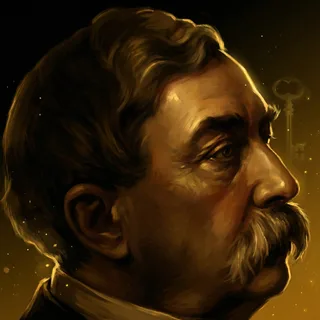
Thomas Jay Hudson
Last updated: September 4, 2026
Thomas Jay Hudson's dual-mind theory provides the bedrock for understanding how our inner world shapes our outer reality, a concept foundational to modern manifestation and New Thought.
Lived
1834 – 1903
Nationality
American
Tradition
Mental Science
Known For
The Law of Psychic Phenomena (1893), A Scientific Demonstration of the Future Life (1895), The Divine Pedigree of Man (1899)
Tone
Balanced3 / 6
Scientific framing of objective/subjective mind. Researcher's detached tone.
Why Hudson Matters
Hudson gave the burgeoning New Thought movement a 'scientific' framework, moving it beyond mere faith into a realm of psychological law. His distinction between the objective and subjective minds offered a clear, actionable model for how thought influences experience. Without Hudson, the practical application of mental principles, so central to authors like Troward and Murphy, would lack its crucial theoretical underpinning. He systematized the mechanism by which mental suggestion operates.
Start Here: The Reading Path
- The Law of Psychic Phenomena1893This seminal work introduces Hudson's core theory of the objective and subjective minds, detailing their distinct functions and the laws governing their interaction. It lays out the principles of suggestion and auto-suggestion.Focus on the initial chapters defining the two minds and their characteristics. This is the conceptual heart of his work and its lasting legacy.
- A Scientific Demonstration of the Future Life1895Building on his dual-mind theory, Hudson applies his psychological laws to argue for the existence of a future life, engaging with spiritualism and psychical research from a rationalist perspective.Read this to see how Hudson extends his core ideas into broader metaphysical questions, showcasing the versatility of his framework.
Core Ideas in 60 Seconds
- Human consciousness operates through two distinct faculties: the objective mind and the subjective mind.The objective mind is the seat of conscious reason, volition, and sensory perception, while the subjective mind is subconscious, amenable to suggestion, and controls bodily functions and memory.Objective Mind
- The subjective mind is perpetually amenable to suggestion, acting upon it without question or critical analysis.Any thought, idea, or belief impressed upon the subjective mind, whether consciously or unconsciously, will be acted upon as if it were an absolute truth.Suggestion
- The subjective mind is the seat of all psychic phenomena, including telepathy, clairvoyance, and spiritual healing.These phenomena are not supernatural but are manifestations of the subjective mind's inherent powers, operating according to fixed, albeit often misunderstood, psychological laws.Psychic Phenomena
- The objective mind has the power to control and direct the subjective mind through conscious suggestion and auto-suggestion.By consciously impressing desired thoughts and beliefs upon the subjective mind, individuals can influence their health, circumstances, and overall life experience.Auto-suggestion
Major Works
| Title | Year | What It Teaches | Best For |
|---|---|---|---|
| The Law of Psychic Phenomena | 1893 | It establishes the fundamental distinction between the objective and subjective minds and explains how suggestion governs their interaction. | Anyone seeking to understand the foundational psychological model of New Thought and the mechanics of manifestation. |
| A Scientific Demonstration of the Future Life | 1895 | It applies the principles of psychic phenomena to argue for the continuity of consciousness beyond physical death, integrating spiritualism with psychological theory. | Readers interested in Hudson's broader metaphysical views and his attempt to reconcile science with spiritual beliefs. |
| The Divine Pedigree of Man | 1899 | This work explores the evolutionary and spiritual development of humanity, positing an inherent divine potential within each individual. | Those interested in Hudson's theological and philosophical extensions of his psychological theories. |
Lineage & Influence
Influenced By
Hudson drew heavily from the emerging field of Mesmerism and the broader Psychical research movement of his era, seeking to provide a 'scientific' explanation for phenomena observed by these groups. His work also echoes earlier philosophical dualisms regarding mind and body.
Influenced
His dual-mind theory profoundly shaped Thomas Troward's concept of the 'Spirit of the Individual' and the 'Universal Spirit,' Charles F. Haanel's 'Master Key System,' and Joseph Murphy's teachings on the 'power of your subconscious mind.' Many New Thought authors adopted his terminology and framework.
Parallel Thinkers
While distinct, his work shares conceptual ground with Phineas Parkhurst Quimby's ideas on mental healing and the power of belief, and later, with William Walker Atkinson's exploration of mental faculties and subconscious power.
The Story
Born in 1834, Thomas Jay Hudson was an American journalist and psychical researcher who sought to bring scientific rigor to the study of mental and spiritual phenomena. His groundbreaking work, 'The Law of Psychic Phenomena' (1893), introduced the highly influential distinction between the objective and subjective minds, providing a rational, psychological explanation for the power of suggestion and the efficacy of mental healing. This framework offered the burgeoning New Thought movement a much-needed scientific basis, allowing its proponents to articulate their principles not as mere faith, but as adherence to demonstrable psychological laws. Hudson continued to elaborate on these ideas, applying them to questions of immortality and human evolution, solidifying his place as a pivotal figure in the development of modern esoteric and self-help thought before his passing in 1903.
In Their Own Words
The subjective mind is constantly amenable to control by suggestion.
The Law of Psychic Phenomena
The subjective mind is incapable of inductive reasoning. It deduces all its conclusions from premises furnished it by the objective mind.
The Law of Psychic Phenomena
The subjective mind controls the functions, sensations, and conditions of the body.
The Law of Psychic Phenomena
Frequently Asked Questions
What is the difference between Hudson's objective and subjective mind?
The objective mind is your conscious, reasoning, and sensory awareness, responsible for logic and willpower. The subjective mind is your subconscious, non-reasoning mind, which accepts suggestions as truth and controls automatic bodily functions and psychic abilities.
How did Hudson influence New Thought?
Hudson provided New Thought with a 'scientific' and psychological explanation for how mental principles work. His dual-mind theory became a foundational concept, explaining how positive affirmations and mental treatments could manifest results by influencing the subjective mind.
Is Hudson's work still relevant today?
Absolutely. His core ideas about the power of the subconscious mind and the role of suggestion are fundamental to modern self-help, manifestation practices, and even therapeutic techniques like hypnotherapy. Many contemporary authors build directly on his framework.
Explore Further
The Master Key Experience
The books teach the law.
The Experience trains it.
A 24-week guided journey through the laws of mind: weekly gates, lessons drawn from the texts in this library, and a living companion that remembers you.
Begin the ExperienceFree · Begin without an account