
Table of ContentsPaul Foster Case
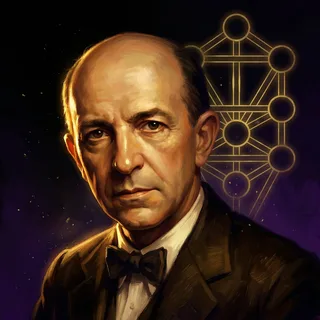
Paul Foster Case
Last updated: September 4, 2026
Paul Foster Case offers the most coherent and practical system for understanding the Western Esoteric Tradition through the lens of Qabalah and Tarot.
Lived
1884 – 1954
Nationality
American
Tradition
Western Qabalah
Known For
The Tarot: A Key to the Wisdom of the Ages (1947), The True and Invisible Rosicrucian Order (1927), Highlights of Tarot (1931)
Tone
Balanced3.5 / 6
Tarot-Qabalah meditation engaging all Sephiroth including shadow aspects, focused on growth.
Why Case Matters
Case synthesized disparate occult teachings into a unified, accessible curriculum, making complex esoteric concepts applicable to personal development. He moved Tarot beyond mere fortune-telling, establishing it as a profound symbolic language for spiritual growth and psychological insight. His work provides a structured path for serious students seeking to integrate ancient wisdom into a modern spiritual practice, emphasizing direct experience over dogma.
Start Here: The Reading Path
- Highlights of Tarot1931This concise work provides an excellent introduction to Case's unique perspective on the Tarot as a 'pictorial textbook of Ageless Wisdom.' It lays the groundwork for understanding the cards as keys to Qabalistic and Hermetic principles.Read this first to grasp his fundamental approach before delving into the card-by-card analysis.
- The Tarot: A Key to the Wisdom of the Ages1947Case's magnum opus, this book systematically unpacks the esoteric symbolism of each Major Arcana card, linking them to the Hebrew alphabet, the Tree of Life, and psychological archetypes. It is a comprehensive guide to his system.Approach this as a study guide, working through each card deliberately. Do not rush.
- The True and Invisible Rosicrucian Order1927This text explores the historical and philosophical foundations of Rosicrucianism, revealing its deep connections to Qabalah and alchemy. It places the Western esoteric tradition within a broader spiritual lineage.Read this after gaining a solid understanding of his Tarot work to contextualize the broader esoteric framework.
Core Ideas in 60 Seconds
- The Tarot is a pictorial textbook of Ageless Wisdom, not merely a divinatory tool.Each Tarot card encapsulates profound spiritual, psychological, and Qabalistic truths, serving as a symbolic key to universal principles.Tarot
- Qabalah provides the structural framework for understanding the universe and human consciousness.The Tree of Life, with its Sefirot and paths, maps the emanations of the Divine and the stages of spiritual evolution.Kabbalah
- Spiritual development is a process of conscious self-transformation and realization of one's divine nature.Through study, meditation, and practical application of esoteric principles, individuals can ascend the Tree of Life and achieve higher states of consciousness.Self-Realization
- The universe operates according to immutable laws, which can be understood and utilized for personal growth.Hermetic principles, such as 'As Above, So Below,' govern both the macrocosm and microcosm, offering keys to inner and outer mastery.Hermetic Principles
Major Works
| Title | Year | What It Teaches | Best For |
|---|---|---|---|
| The Tarot: A Key to the Wisdom of the Ages | 1947 | A comprehensive exegesis of the Major Arcana, linking each card to Qabalistic, astrological, and numerological correspondences. | Serious students seeking a detailed, systematic understanding of Tarot as a spiritual path. |
| The True and Invisible Rosicrucian Order | 1927 | An exploration of the historical and philosophical roots of Rosicrucianism, emphasizing its Qabalistic and Hermetic foundations. | Those interested in the historical lineage and underlying philosophy of Western esotericism. |
| Highlights of Tarot | 1931 | A concise overview of the Tarot's esoteric significance, serving as an ideal entry point into Case's system. | Beginners to Case's work or those seeking a foundational understanding of his Tarot philosophy. |
| The Book of Tokens (Tarot Meditations) | 1934 | A poetic and meditative exploration of the Hebrew letters and their corresponding Major Arcana cards, designed for contemplation. | Practitioners seeking meditative and contemplative exercises to deepen their understanding of Tarot and Qabalah. |
Lineage & Influence
Influenced By
Case's work was profoundly shaped by the foundational teachings of the Hermetic Order of the Golden Dawn, particularly through S.L. MacGregor Mathers's systematization of Qabalah and Tarot. Arthur Edward Waite's emphasis on the spiritual interpretation of Tarot also resonated with Case's approach, though Case developed a distinct system.
Influenced
Case directly influenced generations of students through the Builders of the Adytum (B.O.T.A.), his enduring mystery school. His systematic approach to Tarot and Qabalah has shaped modern Tarot interpretation, moving it towards psychological and spiritual application, and continues to be a primary source for those studying Western Qabalah.
Parallel Thinkers
Dion Fortune, another prominent figure in the post-Golden Dawn esoteric landscape, also sought to systematize Western esotericism and make it accessible. Israel Regardie, a contemporary and fellow Golden Dawn initiate, meticulously preserved and published the Golden Dawn's rituals, providing context for Case's own adaptations and innovations.
The Story
Born in 1884, Paul Foster Case's early life was marked by precocious musical talent and a profound spiritual quest. Dissatisfied with conventional religion, he found his intellectual and spiritual home in the burgeoning occult revival of the early 20th century. After a pivotal encounter with the Tarot in his youth, he dedicated his life to deciphering its esoteric meaning, eventually joining a successor organization to the Hermetic Order of the Golden Dawn. Disillusioned by internal politics and a desire to make esoteric wisdom more accessible, Case established the Builders of the Adytum (B.O.T.A.) in 1922. Through B.O.T.A., he meticulously systematized the correspondences between the Tarot, Qabalah, and astrology, creating a practical and coherent curriculum for spiritual development that emphasized self-transformation and direct experience over ceremonial magic. His work, particularly on the Tarot, redefined its role from a divinatory tool to a profound 'pictorial textbook of Ageless Wisdom,' leaving an indelible mark on Western esotericism until his passing in 1954.
In Their Own Words
The Tarot is a pictorial textbook of Ageless Wisdom.
Highlights of Tarot
All true magical operations are psychological processes.
The Book of Tokens (Tarot Meditations)
The purpose of occult training is to enable us to express more of the power, wisdom, and love which are inherent in our true spiritual nature.
The Tarot: A Key to the Wisdom of the Ages
Every letter of the Hebrew alphabet is a key to the mysteries of the universe and of man.
The Book of Tokens (Tarot Meditations)
Frequently Asked Questions
What is the Builders of the Adytum (B.O.T.A.)?
B.O.T.A. is a mystery school founded by Paul Foster Case in 1922. It offers a structured, correspondence-based curriculum for the study and practice of Western Qabalah, Tarot, and Hermeticism, emphasizing self-initiation and practical application of esoteric principles.
How did Paul Foster Case's Tarot differ from others?
Case moved away from purely divinatory interpretations, presenting the Tarot as a symbolic system for understanding universal laws and psychological archetypes. He meticulously linked each card to Hebrew letters, Qabalistic paths on the Tree of Life, and astrological correspondences, making it a tool for spiritual growth and self-transformation rather than just fortune-telling.
Is Paul Foster Case's work relevant for beginners in esotericism?
Yes, Case's work is highly recommended for serious beginners. While comprehensive, his systematic approach provides a clear framework for understanding complex esoteric concepts, making the Western Qabalistic tradition accessible and practical for personal study and spiritual development.
Explore Further
The Master Key Experience
The books teach the law.
The Experience trains it.
A 24-week guided journey through the laws of mind: weekly gates, lessons drawn from the texts in this library, and a living companion that remembers you.
Begin the ExperienceFree · Begin without an account