
Table of ContentsSwami Vivekananda
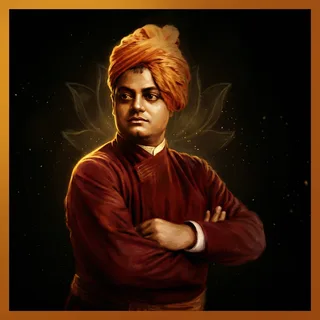
Swami Vivekananda
Last updated: September 4, 2026
Swami Vivekananda is the essential bridge from ancient Eastern wisdom to the practical spiritual philosophies of the modern West.
Lived
1863 – 1902
Nationality
Indian
Tradition
Eastern Philosophy
Known For
Raja Yoga (1896), Karma Yoga (1896), Jnana Yoga (1899)
Tone
Light-Leaning2 / 6
Raja Yoga and Vedanta; intellectually demanding but framed through service, love, and human divinity.
Why Vivekananda Matters
Vivekananda's profound articulation of Vedanta and Yoga in accessible terms fundamentally reshaped Western spirituality. He provided the intellectual and experiential framework that allowed Eastern thought to penetrate and fertilize the burgeoning New Thought and Theosophical movements, offering a universal spiritual science grounded in self-realization rather than dogma. His influence is still felt in every yoga studio and mindfulness practice today.
Start Here: The Reading Path
- Raja Yoga1896This text provides a systematic exposition of Patanjali's Yoga Sutras, focusing on the psychological and spiritual discipline of meditation and concentration. It is not merely an athletic guide, but a profound manual for mental control and self-mastery.Approach this as a guide to mental discipline, not just physical postures. It lays the groundwork for understanding the mind's role in spiritual development.
- Karma Yoga1896Vivekananda elucidates the philosophy of action without attachment to results. He argues that selfless work, performed as an offering, is a powerful path to spiritual liberation and self-realization.This book offers a practical spiritual philosophy for daily life, showing how every action can be a step towards enlightenment. It's highly relevant for those seeking to integrate spirituality with their professional or personal duties.
- Jnana Yoga1899This work explores the path of knowledge and discrimination, emphasizing the non-dual nature of reality and the ultimate identity of the individual soul (Atman) with the Universal Spirit (Brahman). It challenges intellectual understanding to transcend illusion.This is Vivekananda at his most philosophical. It's best read after gaining some familiarity with his other works, as it delves into the deepest metaphysical aspects of Vedanta.
Core Ideas in 60 Seconds
- The divinity of the soul is inherent in every being.Every individual is potentially divine, and the goal of human life is to manifest this inner divinity.Self-Realization
- Religion is not about dogma, but about realization.True religion is not found in rituals or creeds, but in the direct, personal experience of the divine.Realization
- The unity of all religions is a fundamental truth.All religions are different paths leading to the same ultimate reality, like rivers flowing into the same ocean.Unity
- Work, worship, psychic control, or philosophy, one or more or all of these, are the means to freedom.Vivekananda advocated for four primary yogas (Karma, Bhakti, Raja, Jnana) as distinct yet interconnected paths to spiritual liberation.Yoga
Major Works
| Title | Year | What It Teaches | Best For |
|---|---|---|---|
| Raja Yoga | 1896 | A comprehensive guide to the science of mind control and meditation, based on Patanjali's Yoga Sutras. | Those seeking a systematic approach to mental discipline and spiritual development through meditation. |
| Karma Yoga | 1896 | The philosophy of selfless action, demonstrating how work can be a path to liberation when performed without attachment to results. | Individuals looking to integrate spiritual principles into their daily work and responsibilities. |
| Jnana Yoga | 1899 | An exploration of the path of knowledge, emphasizing the non-dual nature of reality and the ultimate identity of the individual self with the Absolute. | Philosophically inclined students interested in the metaphysical foundations of Vedanta and the path of discrimination. |
| My Master (Ramakrishna) | 1901 | A biographical account and tribute to his guru, Ramakrishna, offering insights into the life and teachings of a profound mystic. | Those interested in the spiritual lineage of Vivekananda and the practical application of Vedantic principles in a master's life. |
Lineage & Influence
Influenced By
Vivekananda was profoundly shaped by the ancient Vedantic tradition of India, particularly the Advaita Vedanta school, and was the foremost disciple of the 19th-century mystic Ramakrishna, who taught the unity of all religions through direct experience.
Influenced
His teachings were foundational to the Western yoga tradition, significantly impacted the New Thought movement by introducing concepts like the 'divinity of man,' and directly inspired figures like Paramahansa Yogananda and many other spiritual teachers of the 20th century.
Parallel Thinkers
He shares common ground with Ralph Waldo Emerson in his emphasis on individual spiritual experience and the immanence of the divine, and with Helena Petrovna Blavatsky in promoting a universal spiritual philosophy, though their approaches and sources differed significantly.
The Story
Born Narendranath Datta in Calcutta, India, Vivekananda's early life was marked by intellectual curiosity and a deep spiritual yearning. He encountered his guru, Ramakrishna, who profoundly transformed his understanding of spirituality, guiding him from skepticism to direct experience of the divine. After Ramakrishna's passing, Vivekananda embarked on extensive travels across India, witnessing the suffering of his people and developing a vision for a revitalized India rooted in its spiritual heritage. His pivotal moment came at the 1893 Parliament of the World's Religions in Chicago, where his electrifying address introduced Vedanta and Yoga to the Western world, captivating audiences with his message of universal religion and the inherent divinity of humanity. He spent the remainder of his short life establishing Vedantic centers, lecturing tirelessly, and writing, thus becoming the primary architect of the global dissemination of Eastern spiritual wisdom.
In Their Own Words
Arise, awake, and stop not till the goal is reached.
Inspired by Katha Upanishad, frequently used in his lectures and writings.
Each soul is potentially divine. The goal is to manifest this Divinity within, by controlling nature, external and internal. Do this either by work, or worship, or psychic control, or philosophy, by one or more or all of these, and be free. This is the whole of religion. Doctrines, or dogmas, or rituals, or books, or temples, or forms, are but secondary details.
Complete Works of Swami Vivekananda, Vol. 1, Raja Yoga
The greatest religion is to be true to your own nature. Have faith in yourselves.
Complete Works of Swami Vivekananda, Vol. 3, Lectures from Colombo to Almora
Frequently Asked Questions
What is Swami Vivekananda's main teaching?
Vivekananda's core teaching emphasizes the inherent divinity of every soul and the ultimate unity of all existence. He taught that the purpose of human life is to realize this divinity through various paths, such as selfless action (Karma Yoga), devotion (Bhakti Yoga), meditation (Raja Yoga), or philosophical inquiry (Jnana Yoga).
How did Vivekananda influence the West?
Vivekananda introduced the philosophies of Vedanta and Yoga to the Western world, most notably at the 1893 Parliament of the World's Religions. He provided a rational, universal framework for spirituality that resonated deeply with emerging movements like New Thought and Theosophy, laying the groundwork for the modern spiritual and self-help movements.
Is Vivekananda related to modern yoga practices?
Yes, Vivekananda's book 'Raja Yoga' was one of the first comprehensive expositions of Patanjali's Yoga Sutras for a Western audience. While he emphasized the mental and spiritual aspects of yoga, his work was instrumental in popularizing yoga concepts that eventually contributed to the development of modern physical yoga practices.
Explore Further
The Master Key Experience
The books teach the law.
The Experience trains it.
A 24-week guided journey through the laws of mind: weekly gates, lessons drawn from the texts in this library, and a living companion that remembers you.
Begin the ExperienceFree · Begin without an account