
Table of ContentsGerald Gardner
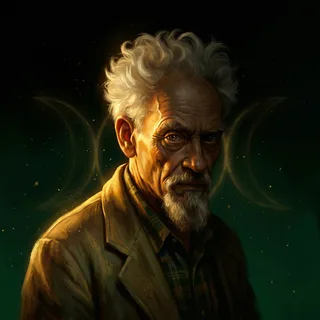
Gerald Gardner
Last updated: September 4, 2026
Gerald Gardner single-handedly forged a modern, nature-based spirituality, giving voice and form to a resurgence of the Old Religion.
Lived
1884 – 1964
Nationality
British
Tradition
Wicca
Known For
Witchcraft Today (1954), The Meaning of Witchcraft (1959), Book of Shadows (ritual text)
Tone
Balanced3.5 / 6
"An it harm none" is a genuine ethical anchor. Folksy-anthropological tone. Nature-reverent despite operative magic content.
Why Gardner Matters
Gardner is not merely an author; he is the architect of a global religious movement. His synthesis of historical fragments, ceremonial magic, and personal gnosis created Wicca, a vibrant and accessible form of Neopaganism. He moved witchcraft from the shadows of folklore and academic speculation into a living, practicing tradition, providing rituals, ethical frameworks, and a community for those seeking an alternative spiritual path.
Start Here: The Reading Path
- Witchcraft Today1954This is Gardner's foundational text, presenting his claims of an unbroken witch cult and outlining the core tenets and practices of what would become Wicca. It's a blend of anthropological observation, historical assertion, and thinly veiled religious instruction.Read this first to understand the historical and theoretical basis of Gardnerian Wicca. Be aware that some historical claims are now widely debated.
- The Meaning of Witchcraft1959A more philosophical and defensive work than its predecessor, this book delves deeper into the ethical and spiritual rationale behind modern witchcraft, responding to criticisms and further elaborating on the religion's principles and practices.Follow up with this to grasp Gardner's mature thought and the ethical framework he envisioned for Wicca, particularly the 'An it harm none' principle.
Core Ideas in 60 Seconds
- Wicca is the survival of an ancient, pre-Christian nature religion.Gardner asserted that his tradition was a direct continuation of an 'Old Religion' that had survived persecution in secret covens, a claim heavily influenced by Margaret Murray.Wicca
- Divinity is immanent and dual, embodied as the Horned God and the Great Goddess.Central to Wiccan theology is the worship of both masculine and feminine divine principles, representing nature's creative and destructive forces.
- Magick is a natural force that can be directed for personal and collective betterment.Gardner integrated elements of ceremonial magic, particularly from Aleister Crowley, into a system of ritual practice aimed at spiritual transformation and practical results.Magick
- The Wiccan Rede, 'An it harm none, do what ye will,' is the central ethical principle.This ethical guideline, often attributed to Gardner, emphasizes personal freedom within a framework of non-maleficence, shaping the moral compass of the tradition.
Major Works
| Title | Year | What It Teaches | Best For |
|---|---|---|---|
| Witchcraft Today | 1954 | It introduces the concept of a surviving witch cult and outlines the basic structure and beliefs of modern Wicca. | Anyone seeking to understand the historical and conceptual origins of modern witchcraft. |
| The Meaning of Witchcraft | 1959 | This work elaborates on the philosophy, ethics, and practices of Wicca, responding to public perception and solidifying its religious identity. | Students interested in the ethical dimensions and deeper theological explanations of Gardnerian Wicca. |
| Book of Shadows | A collection of rituals, spells, invocations, and ethical guidelines, serving as the practical template for Gardnerian Wiccan coven practice. | Practitioners of Wicca, especially those interested in traditional Gardnerian liturgy and structure. |
Lineage & Influence
Influenced By
Gardner drew heavily from the anthropological theories of Margaret Murray, who posited a widespread pre-Christian witch cult. He also incorporated ceremonial magic principles from S.L. MacGregor Mathers' Golden Dawn and the radical individualism and magical techniques of Aleister Crowley.
Influenced
His work directly led to the formation of modern Wicca and its various traditions, profoundly shaping Neopaganism. Doreen Valiente, his high priestess, was instrumental in refining and expanding his initial teachings, becoming a significant figure in her own right.
Parallel Thinkers
While distinct, Gardner's efforts to revive and systematize an ancient spiritual path can be seen as paralleling the work of figures like Rudolf Steiner in Anthroposophy or even the Theosophists in their attempts to synthesize esoteric traditions into a coherent system.
The Story
Gerald Gardner, a British civil servant with a passion for anthropology and the occult, found himself at a crossroads in the mid-20th century. Having retired and explored various esoteric societies, he claimed initiation into a clandestine coven of witches in the New Forest in 1939. This pivotal experience, whether literal or symbolic, became the catalyst for his life's work. Synthesizing elements from historical research, ceremonial magic, and his own spiritual insights, Gardner meticulously crafted a new religious system. Through his writings and the establishment of covens, he brought forth Wicca, a nature-revering, dual-deity worshiping tradition that would ignite a global spiritual movement, forever changing the landscape of modern paganism.
In Their Own Words
An it harm none, do what ye will.
Often attributed to Gardner, though its precise origin is debated, it is central to Wiccan ethics.
The witches are a kindly folk, they have no evil in them, and their greatest desire is to do good.
Witchcraft Today
We do not worship the Devil. We do not worship evil. We worship the God and the Goddess, the powers of nature.
The Meaning of Witchcraft
Frequently Asked Questions
Is Gardner's account of being initiated into an ancient witch coven true?
This is a highly debated topic among scholars and practitioners. While the existence of a pre-Gardnerian coven is plausible, many of Gardner's specific claims are difficult to verify and are often viewed as a mythic origin story rather than strict historical fact.
What is the 'Book of Shadows' and did Gardner write it all himself?
The 'Book of Shadows' is a collection of ritual texts, spells, and instructions for Wiccan practice. Gardner compiled and wrote much of the original material, but it was significantly revised and expanded by his high priestess, Doreen Valiente, and later practitioners.
How did Aleister Crowley influence Gerald Gardner?
Gardner was acquainted with Crowley and incorporated several elements from Crowley's Thelema and ceremonial magic into early Wiccan rituals, including the concept of 'Do what thou wilt' which Gardner adapted into the Wiccan Rede, 'An it harm none, do what ye will.'
Explore Further
The Master Key Experience
The books teach the law.
The Experience trains it.
A 24-week guided journey through the laws of mind: weekly gates, lessons drawn from the texts in this library, and a living companion that remembers you.
Begin the ExperienceFree · Begin without an account