
Table of ContentsAustin Osman Spare
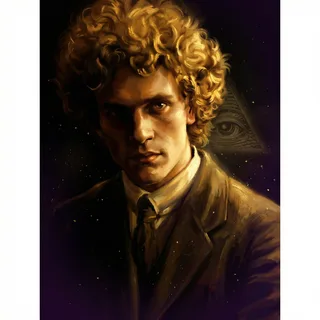
Austin Osman Spare
Last updated: September 4, 2026
The artist-magician who stripped away Victorian ritual to reveal magic's psychological core, creating the blueprint for modern chaos magic.
Lived
1886 – 1956
Nationality
British
Tradition
Occultism
Known For
The Book of Pleasure (1913), The Focus of Life (1921)
Tone
Deep Shadow5.5 / 6
Sigil magic and direct unconscious manipulation, deliberately bypassing moral/rational controls. Anti-respectable, desire/gnosis-focused, aesthetically transgressive.
Why Spare Matters
Austin Spare demolished the elaborate ceremonial traditions of his time to focus on what actually works: the direct manipulation of consciousness through symbol and desire. His sigil technique became the foundation of chaos magic, while his theory of the subconscious as the true magical engine anticipated modern psychological approaches by decades. Where others built complex systems, Spare found the elegant mechanism beneath all magical operation.
Start Here: The Reading Path
- The Book of Pleasure1913Spare's masterwork introduces his revolutionary sigil method and doctrine of the Kia (the divine spark within). Focus on the practical instructions for creating and charging sigils, but don't skip his dense philosophical framework.Read Chapter 1 slowly three times before proceeding. Spare's writing style is intentionally cryptic.
- The Focus of Life1921A more mature work that develops his psychological theory of magic and the relationship between conscious will and unconscious power. Essential for understanding how belief shapes reality.
Core Ideas in 60 Seconds
- The subconsciousness is our GodAll magical power comes from the unconscious mind, which operates beyond the limitations of rational thought and social conditioning.Subjective Mind
- Sigils bypass the conscious mind to implant desire directly into the unconsciousBy creating abstract symbols from statements of will, then forgetting their meaning, we can program the subconscious without interference from doubt.Magick
- Neither-neither is the method of wisdomTrue magical consciousness transcends all dualities and oppositions, operating from a state beyond moral and intellectual categories.Gnosis
- The Kia is the atmospheric 'I' or the dweller between the conscious and subconsciousThis divine spark within each person is the true source of magical power, existing at the threshold between ordinary awareness and the unconscious depths.Divine Principle
Major Works
| Title | Year | What It Teaches | Best For |
|---|---|---|---|
| The Book of Pleasure | 1913 | The fundamental techniques of sigil magic and the philosophy of self-love as the path to divine realization | Practitioners ready for direct magical work |
| The Focus of Life | 1921 | Advanced psychological theory of how consciousness creates reality through unconscious processes | Advanced readers interested in the theoretical foundations |
Lineage & Influence
Influenced By
Spare learned ceremonial techniques from the Golden Dawn tradition but rejected their elaborate rituals. His psychological approach shows influence from emerging theories of the unconscious, though he developed his ideas independently of Freud.
Influenced
Every chaos magician since owes their core techniques to Spare's innovations. Modern practitioners from Peter Carroll to Grant Morrison trace their lineage directly to his sigil method and anti-dogmatic approach.
Parallel Thinkers
While Aleister Crowley was building elaborate ceremonial systems, Spare was discovering the minimal viable techniques that actually produce results. Both recognized the primacy of will, but Spare found the more direct path.
The Story
Austin Osman Spare began as a promising artist in Edwardian London, exhibiting at the Royal Academy while still a teenager. But his encounter with an elderly witch named Mrs. Patterson opened him to magical possibilities that conventional occultism couldn't satisfy. Rejecting the theatrical ceremonies of groups like the Golden Dawn, he developed a stripped-down approach focused on the psychological mechanics of desire and belief. Working in poverty and obscurity for most of his life, creating art by day and magic by night, he discovered principles that wouldn't be widely understood until chaos magic emerged decades after his death. His greatest insight was recognizing that elaborate rituals were unnecessary distractions from the real work: the direct programming of the unconscious mind through symbol and gnosis.
In Their Own Words
Belief is the fall from Eden. When you believe in something, you have closed your mind to other possibilities.
The Book of Pleasure
The subconsciousness is our God, our forgotten self, that (seemingly) never sleeps; dreams our experiences and is our sense of existing.
The Book of Pleasure
Magic is the reduction of properties to simplicity, making them transmutable to utilize them afresh by direction, and to dispose of complexity without destruction.
The Focus of Life
Frequently Asked Questions
How do Austin Spare's sigils actually work?
Spare's sigil method works by encoding a desire into an abstract symbol, then using gnosis (altered consciousness) to implant it in the unconscious while the conscious mind forgets the original intention. This bypasses doubt and allows the subconscious to manifest the desire without interference.
What is the difference between Austin Spare and Aleister Crowley?
While Crowley built elaborate ceremonial systems, Spare focused on minimal techniques that produce direct results. Crowley emphasized will and knowledge, but Spare discovered that the unconscious mind was the real magical engine, requiring only simple psychological techniques to access.
Is Austin Spare's magic psychological or supernatural?
Spare viewed this as a false distinction. He believed the unconscious mind was genuinely divine and that psychological techniques could produce real changes in external reality. For him, magic was natural law operating through consciousness.
Explore Further
Related Authors
The Master Key Experience
The books teach the law.
The Experience trains it.
A 24-week guided journey through the laws of mind: weekly gates, lessons drawn from the texts in this library, and a living companion that remembers you.
Begin the ExperienceFree · Begin without an account