
Table of ContentsPeter Carroll
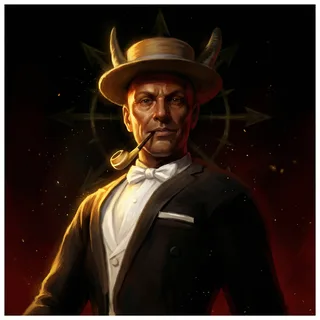
Peter Carroll
Last updated: September 4, 2026
Peter Carroll is the irreverent, pragmatic architect of Chaos Magic, offering a radical, results-oriented path beyond dogmatic belief.
Lived
1953 – present
Nationality
British
Tradition
Chaos Magic
Known For
Liber Null & Psychonaut (1987), Liber Kaos (1992), The Apophenion (2008)
Tone
Pure Shadow6 / 6
Belief-as-tool, pragmatic amorality, deliberate taboo-breaking, "nothing is true, everything is permitted." Self-consciously transgressive.
Why Carroll Matters
Carroll matters because he stripped away the historical accretions and rigid dogma from Western esotericism, presenting magic as a set of psychological and practical techniques rather than a system of fixed beliefs. His work empowered a generation of practitioners to experiment, innovate, and develop their own systems, fundamentally shifting the landscape of modern occultism. He challenged the very notion of 'truth' in magic, advocating for belief as a tool, not a destination.
Start Here: The Reading Path
- Liber Null & Psychonaut1987This foundational text introduces the core principles of Chaos Magic, including sigilization, gnosis, and the concept of paradigm shifting. It's a concise, provocative manual for practical magic.Read 'Liber Null' first for theory, then 'Psychonaut' for practical applications. Don't expect comfort; expect challenge.
- Liber Kaos1992Building upon his earlier work, Carroll delves deeper into advanced magical theory, ethics, and the structure of magical orders. It's more philosophical and less prescriptive than 'Liber Null'.Approach this after digesting 'Liber Null & Psychonaut' to appreciate its nuances and expanded scope.
Core Ideas in 60 Seconds
- Belief is a Tool, Not a TruthMagicians should consciously adopt and discard belief systems (paradigms) as pragmatic tools to achieve specific magical effects, rather than adhering to any single system as absolute truth.Chaos Magic
- Gnosis is the Key to Magical EfficacyMagical operations are most effective when performed in a state of altered consciousness, or gnosis, which bypasses the critical conscious mind.
- Sigils are Potent Manifestation EnginesComplex desires can be condensed into abstract symbols (sigils), charged in gnosis, and then forgotten by the conscious mind to manifest results.Sigil
- The Universe is Subjective and MalleableReality is not fixed but is profoundly influenced by individual and collective belief, allowing for magical intervention and transformation.Manifestation
Major Works
| Title | Year | What It Teaches | Best For |
|---|---|---|---|
| Liber Null & Psychonaut | 1987 | It teaches the fundamental theories and practical techniques of Chaos Magic, emphasizing belief as a tool and the importance of gnosis. | Anyone seeking a direct, pragmatic, and non-dogmatic approach to magic. |
| Liber Kaos | 1992 | This work expands on Chaos Magic theory, exploring advanced concepts, magical ethics, and the dynamics of magical groups. | Practitioners who have mastered the basics and are ready for deeper theoretical and philosophical engagement. |
| The Apophenion: A Chaos Magick Primer | 2008 | Carroll revisits and refines his core ideas, offering new insights and a more mature perspective on Chaos Magic and its implications for reality. | Those looking for a contemporary update and deeper philosophical exploration of Chaos Magic from its originator. |
Lineage & Influence
Influenced By
Carroll drew heavily from the iconoclastic, results-oriented approach of Austin Osman Spare, particularly his theories of belief and sigilization, while also incorporating elements of Aleister Crowley's emphasis on individual will and experimental magic.
Influenced
He is the primary architect of the entire Chaos Magic movement, directly influencing countless practitioners and authors who adopted his pragmatic, anti-dogmatic stance, and popularized modern sigil magic.
Parallel Thinkers
His emphasis on the subjective nature of reality and the power of belief resonates with certain aspects of Neville Goddard's teachings, though Carroll's methods are explicitly magical rather than devotional.
The Story
Born in 1953, Peter Carroll emerged from the counter-cultural ferment of 1970s Britain, disillusioned with the rigid structures and perceived ineffectiveness of traditional occultism. Alongside Ray Sherwin, he co-founded the Illuminates of Thanateros (IOT), an organization dedicated to the exploration and development of a new, experimental form of magic. His seminal work, 'Liber Null & Psychonaut,' published in 1987, codified the principles of Chaos Magic, a system that championed individual experimentation, the pragmatic use of belief, and a focus on demonstrable results over dogmatic adherence. Carroll's provocative and often humorous writing challenged magicians to discard fixed paradigms and embrace a fluid, adaptable approach to reality, forever changing the landscape of modern esotericism.
In Their Own Words
Belief is a tool to be used rather than a truth to be discovered.
Liber Null & Psychonaut
Magic is the art of causing change to occur in conformity with will, by means of belief.
Liber Null & Psychonaut
The universe is a joke. The cosmic egg is a cosmic joke. The cosmic joker is a cosmic joke. And the cosmic joke is a cosmic joke.
Liber Null & Psychonaut
Frequently Asked Questions
What is the core difference between Chaos Magic and traditional magic?
Chaos Magic, as articulated by Carroll, differs by rejecting fixed belief systems and elaborate hierarchies. It emphasizes a pragmatic, results-oriented approach where belief is a temporary tool, enabling practitioners to experiment across various magical paradigms without dogmatic adherence.
Is Chaos Magic dangerous?
Carroll's work emphasizes personal responsibility and experimentation. While not inherently 'dangerous' in a supernatural sense, the psychological flexibility required to constantly shift beliefs can be challenging for some, and a lack of grounding could lead to mental instability if not approached with caution and self-awareness.
Does Peter Carroll still practice or write about Chaos Magic?
Yes, Peter Carroll remains a prominent figure in Chaos Magic. While he has largely retired from public teaching, he continues to write and offer insights, often through his blog and later works like 'The Apophenion', reflecting a more mature and philosophical perspective on his original concepts.
Explore Further
Related Authors
The Master Key Experience
The books teach the law.
The Experience trains it.
A 24-week guided journey through the laws of mind: weekly gates, lessons drawn from the texts in this library, and a living companion that remembers you.
Begin the ExperienceFree · Begin without an account